



Hideaway Bed: Best Space-Saving Bed Options for Small Rooms
Once you know what to look out for, avoiding these ingredients becomes simple and empowering.
 By
Kyle Marquardt
Key Takeaways:
• A hideaway bed tucks into a wall, cabinet, or piece of furniture when you’re not using it, so one room can do two jobs.
• Murphy beds are usually the best long-term hideaway beds because they clear the floor completely and hold a real mattress.
• Sofa beds, daybeds, trundles, and rollaway beds work for occasional guests but fall short for nightly sleep.
• The right pick depends on how often the bed gets used, your ceiling height, and the open footprint of the bed.
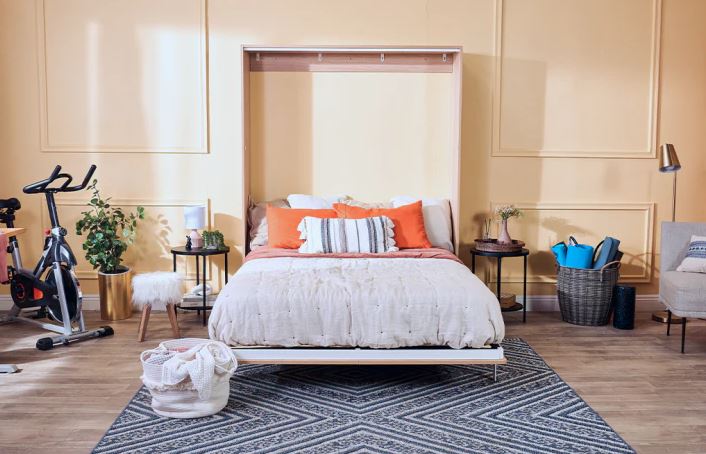
When space is limited, every square foot counts. A hideaway bed is a bed designed to tuck vertically or horizontally into a wall, cabinet, or furniture like a sofa or chest when you don’t need it. The main types are wall beds, sofa beds, cabinet beds, daybeds, and trundles.
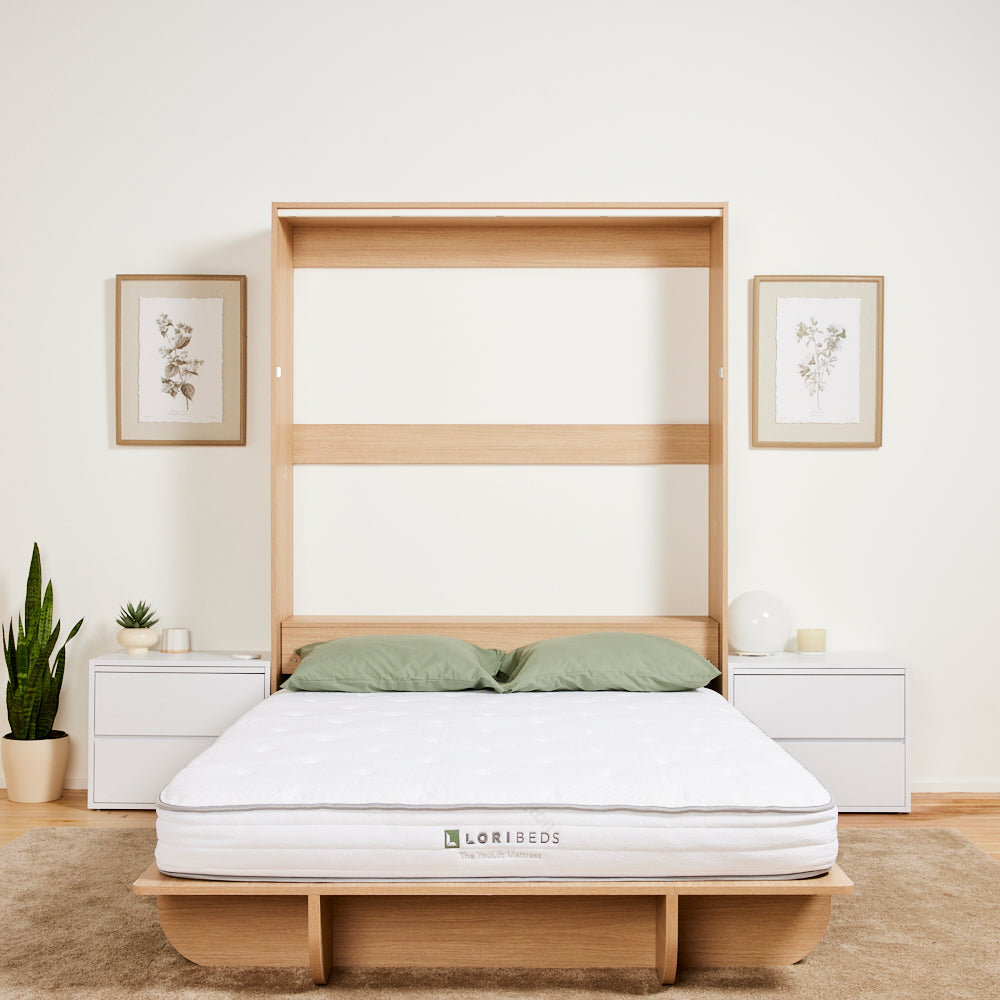
For anyone who’ll sleep on it regularly, a Murphy bed is usually the best long-term option. It’s the only type that gives you the whole floor back and supports a full-thickness mattress.
This guide will explore different types of hideaway beds, why they're a good option for your main or guest room, and how you can blend them into your home décor. If you already know you want a wall bed, shop all Lori Murphy Beds.
Save more with our Murphy bed as you transform your home!
AT A GLANCE
What Is the Best Hideaway Bed?
Best Hideaway Bed Picks for 2026
Hideaway Bed Types Compared
Why Murphy Beds Win for Everyday Use
Best Hideaway Bed for Small Rooms
Best Hideaway Bed for Guest Rooms
Best Hideaway Bed for Home Offices
Best Hideaway Bed for Studio Apartments
Best Hideaway Bed with Desk or Storage
Hideaway Bed Mattress
Frequently Asked Questions
Final Thoughts
What Is the Best Hideaway Bed?
A hideaway bed is a bed designed to be stored in a wall, cabinet, or furniture unit when not in use. It allows a room to serve multiple purposes without a permanent bed taking up floor space.
A Murphy bed is often a practical long-term choice because it can accommodate a standard mattress, provide comfortable everyday sleeping, and store vertically or horizontally inside a cabinet.
For shoppers looking for a durable bed that works in small rooms, the Lori Murphy Beds collection offers different sizes and configurations.
Best Hideaway Bed Picks for 2026
The right hideaway bed depends on your available space, mattress preferences, and how frequently you'll use it. These Lori Beds options offer different configurations for bedrooms, guest rooms, and multipurpose spaces.
|
Product |
Price |
Best For |
|
The Lori Bed (Queen, Vertical) |
From $3,949 |
Guest rooms, primary sleep space, standard ceiling heights |
|
The Lori Bed (Twin, Vertical) |
From $3,399 |
Kids' rooms, solo sleepers, and home offices needing a guest option |
|
The YouLift 2.0 (Queen, Vertical) |
From $2,699 |
Budget-conscious buyers, guest rooms, shared households |
|
Bed + add-on |
Work-from-home setups, multipurpose rooms, and small apartments |
The Lori Bed and YouLift 2.0 are both backed by a Limited Lifetime Warranty.
Hideaway Bed Types Compared
Every bed type has a job. The question is whether that job matches yours, and whether the design fits how you plan to use the room.
|
Type |
Best For |
Comfort Level |
Space Saved |
Daily-Use Fit |
|
Murphy Bed (Wall Bed) |
Guest rooms, offices, studios, and small bedrooms |
High: full-thickness mattress on a slatted base |
Full floor recovered |
Built for nightly use |
|
Sofa Bed |
Living rooms with occasional guests |
Low to medium: 4 to 5-inch pull-out mattress |
Partial; sofa stays on the floor |
Occasional only |
|
Daybed |
Reading nooks, small offices |
Medium: twin mattress |
Partial; frame stays on the floor |
Fine for one sleeper |
|
Trundle Bed |
Kids’ rooms, sleepovers |
Low for adults: sits close to the floor |
Good; two beds in one footprint |
Kids and short stays |
|
Rollaway / Portable Bed |
Emergencies, travel |
Low: thin mattress, steel frame |
Good when stored, but needs closet space |
Short stays only |
|
Cabinet Bed |
Dens and rooms where you can’t mount to a wall |
Medium: varies by model |
Good; looks like a chest when closed |
Varies |
Murphy beds
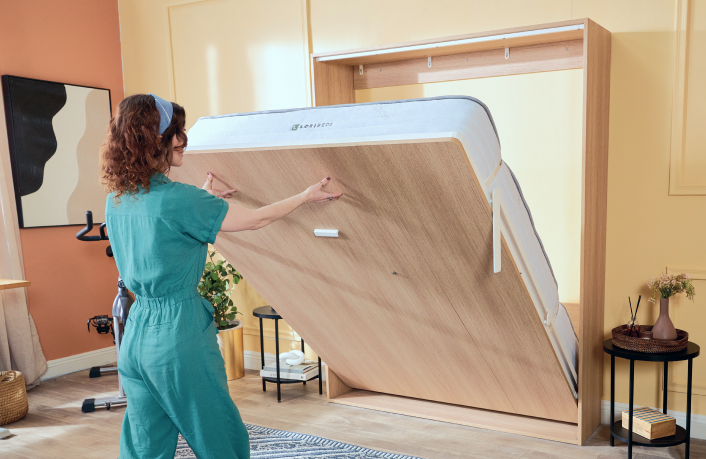
This type of hideaway bed is also called a wall bed. It stores flush in a wall cabinet. Wall-mounted Murphy beds save open floor space by anchoring to structural studs and tucking into the wall. The hinge system secures the bed frame to the floor or inside a cabinet. Nothing else clears the room this well.
Sofa beds
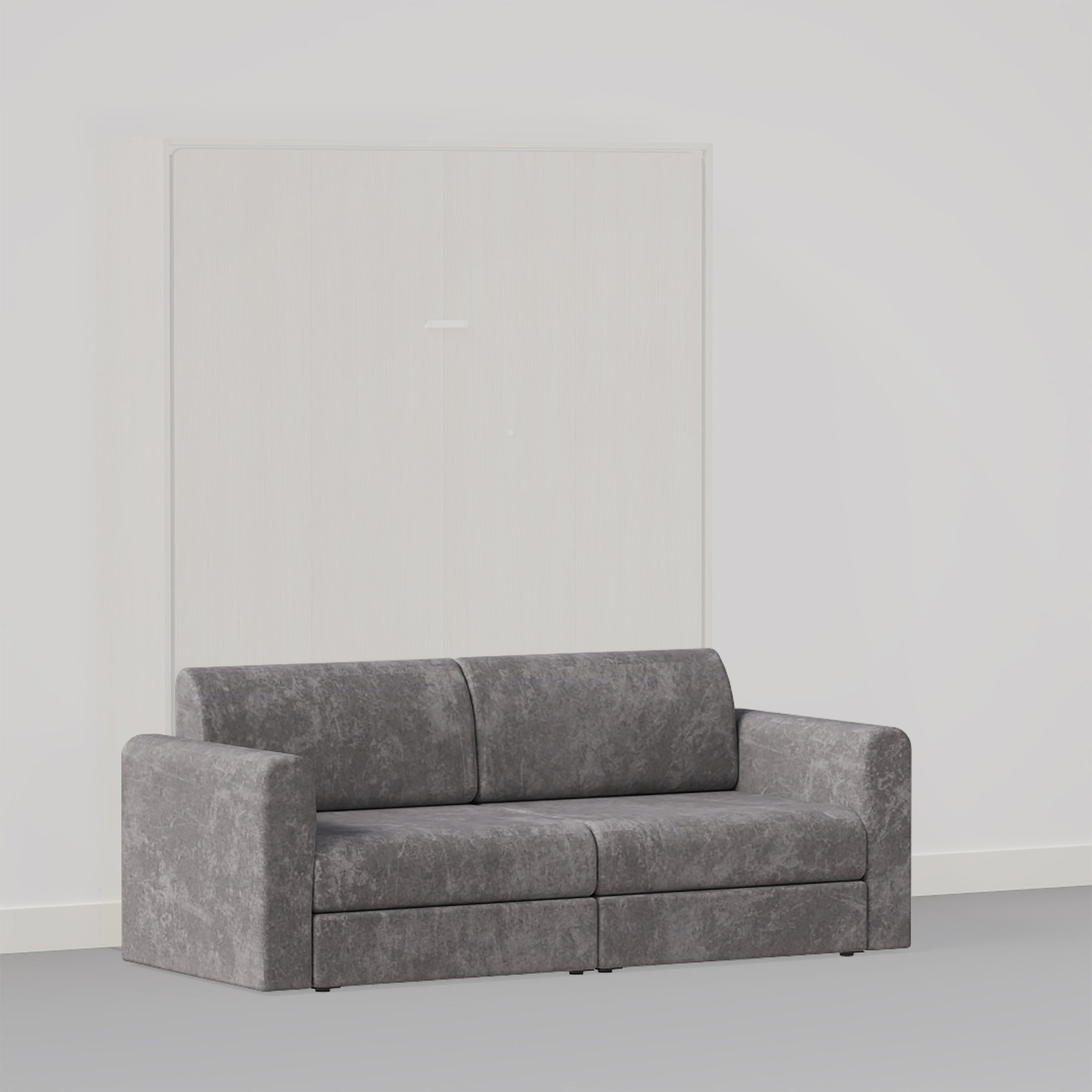
Sofa beds combine a couch and a pull-out bed. They’re good seats and fine for a guest twice a year. The three-section pull-out limits mattress thickness, which is why comfort has a ceiling.
Daybeds
Work as seating by day and a twin bed at night. Many add a trundle. They suit one sleeper in a reading nook or small office.
Trundle beds
Slide a second bed out from under the main one. You get two beds without extra floor space when they’re stored. Kids love them. Adults usually find them too low.
Rollaway beds
These types of hideaways are lightweight and portable, with metal frames and thin mattresses. They’re handy as a backup. They aren’t meant for nightly sleep.
Cabinet beds
Cabinet beds open out or slide out from a freestanding wooden chest. Closed, they pass for dressers or consoles. Hideaway beds like this enhance a room’s design by blending into cabinetry or furniture systems, which helps in rentals where wall mounting isn’t allowed.
Why Murphy Beds Win for Everyday Use

If the bed will be used often, a Murphy bed is the strongest hideaway bed you can buy. Here’s what sets it apart.
Real mattress compatibility
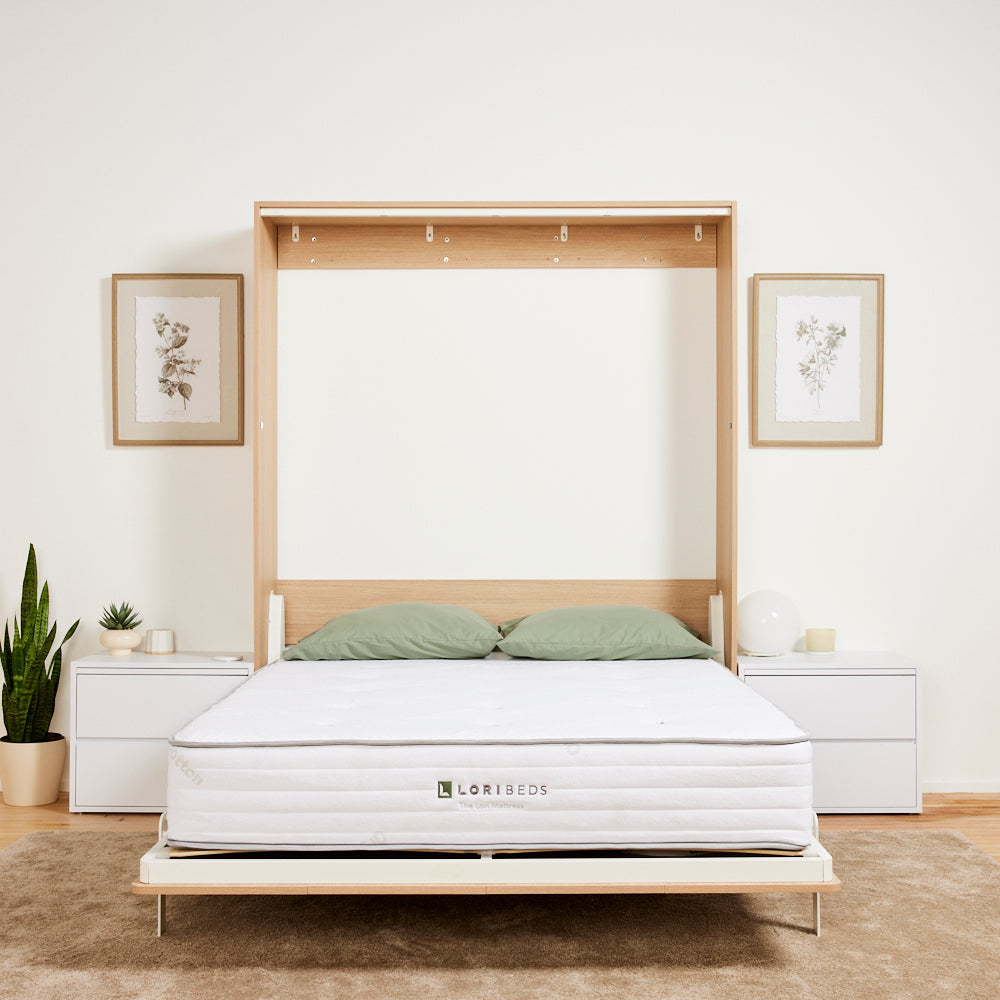
Most hideaway beds in the Murphy category accommodate standard innerspring or memory foam mattresses. The frame of a hideaway bed like this is supported by slats and secured by heavy-duty hinges, so the mattress sits on a firm, even base. Sofa beds can’t match that.
Comfort that holds up nightly
A full-thickness mattress on a proper base sleeps like a conventional bed. Integrated legs drop down automatically on many models to support the mattress when lowered. You lower it, and it’s ready.
Full floor-space recovery
A sofa bed is still a sofa. A trundle still needs a host bed. A Murphy bed disappears, so using a hideaway bed this way maximizes floor space and functionality in small homes.
Long-term durability
The cabinet is attached to the wall, and the bed moves on a lift that takes the weight. Hideaway beds use mechanical engineering and counterbalancing for easy operation. Counterbalance mechanisms often use piston/gas-strut lifts or heavy-duty tension springs.
A quality mechanism and hardware are built for thousands of cycles. The Lori Bed uses a counterbalanced lift system designed for daily use. The lift system allows a single person to lower or raise the bed with minimal effort.
Room flexibility
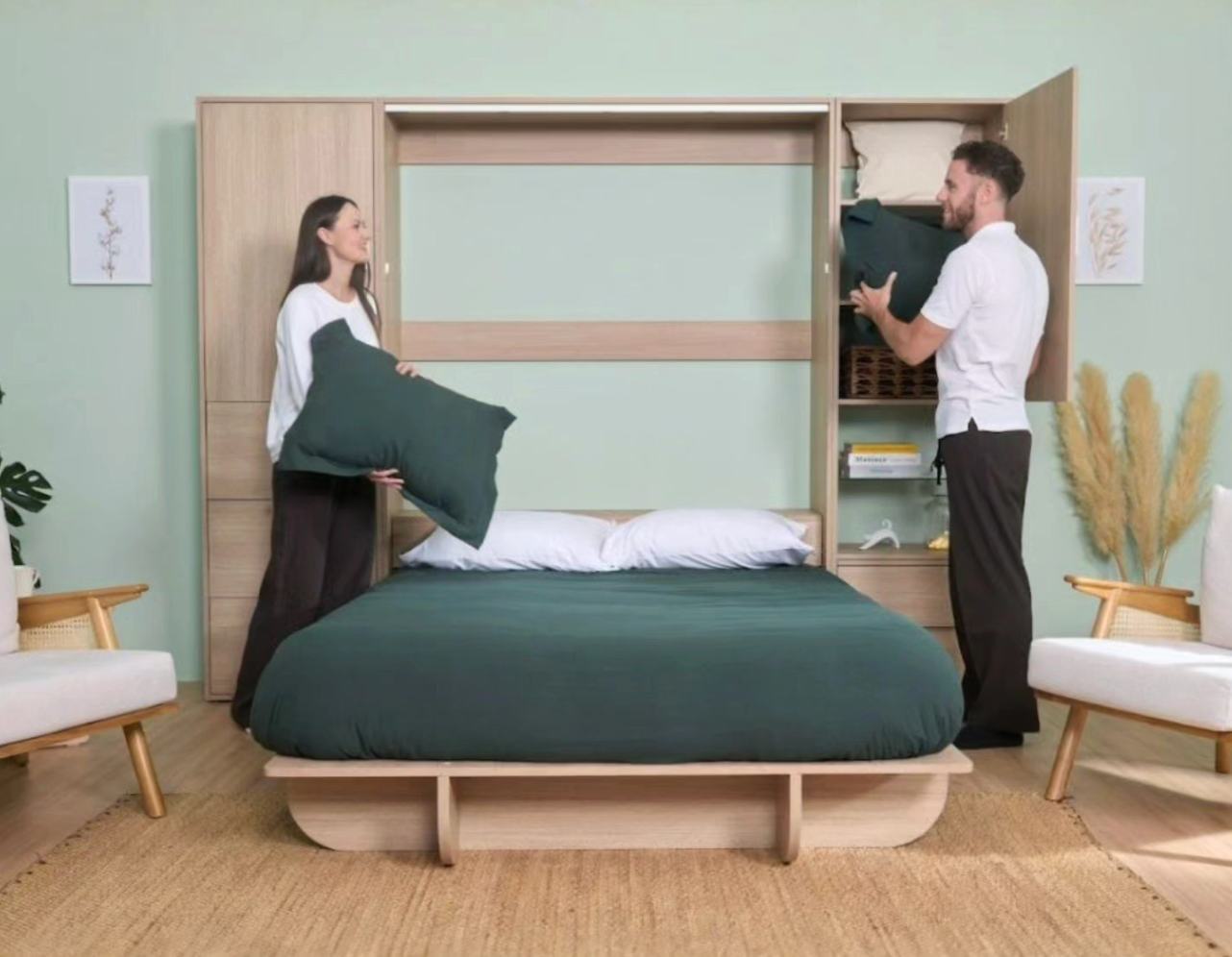
Hideaway beds enable rooms to serve multiple functions without permanent beds. They also create less clutter by concealing bedding when not in use, and the sheets stay on. Concealed mattresses allow for convenient storage and fast setup at night.
Ready to compare frames? Shop all Lori Murphy Beds.
Best Hideaway Bed for Small Rooms
In rooms under 300 square feet, the only hideaway bed that gives you the full room back is a Murphy bed. Sofa beds still occupy floor space as sofas. Trundles require a host bed. Rollaway beds need storage. A Murphy store flushes into the wall and disappears.
Size guidance by room:
• Lori Bed Twin (vertical): about 44.7"W x 84.1"H closed. Extends about 82.6" into the room when open.
• Lori Bed Queen (vertical): about 65.9"W x 84.1"H closed. Extends about 86.3" into the room when open.
Measure with the bed fully extended before buying. Allow 12 to 18 inches of clearance on each side. In very tight rooms, a horizontal Murphy bed — which tucks sideways rather than upward — is worth considering for spaces with low ceilings or under-window placements. The Lori Bed is available in both vertical and horizontal orientations for exactly this reason.
Browse Murphy beds for small spaces. Filter by size and orientation to match your room dimensions.
Best Hideaway Bed for Guest Rooms
Hideaway beds can provide comfortable sleeping options for guests without permanent setups. The catch is the mattress. A cot or thin pull-out tells guests they’re on a temporary fix.
Guests need three things. A full or queen mattress (a twin works for one adult, not a couple), at least 75 inches of sleeping length, and a base that doesn’t sag. Murphy beds cover all three. Most mid-range sofa pull-outs don’t.
If you host more than four times a year, budget for a guest bed as you’d budget for your own. The Lori Bed queen usually ships within 1 to 2 business days, typically arrives 3 to 7 business days after it ships, and comes with a 60-day money-back guarantee. Larger orders that ship by freight take 3 to 5 business days to process and 7 to 10 business days in transit, with delivery by appointment.
Start with the queen vertical Lori Bed and pair it with one of the Murphy bed mattresses built for wall-bed use.
Best Hideaway Bed for Home Offices
A home office that hosts guests is the classic hideaway bed problem. You wanted a guest room. You got an office.
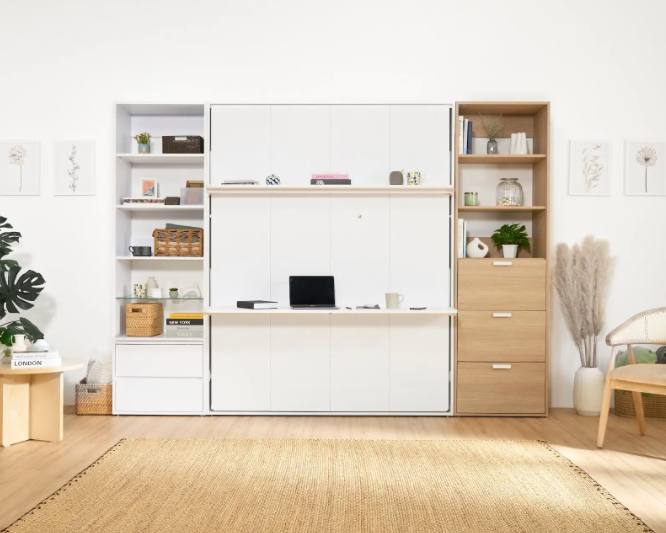
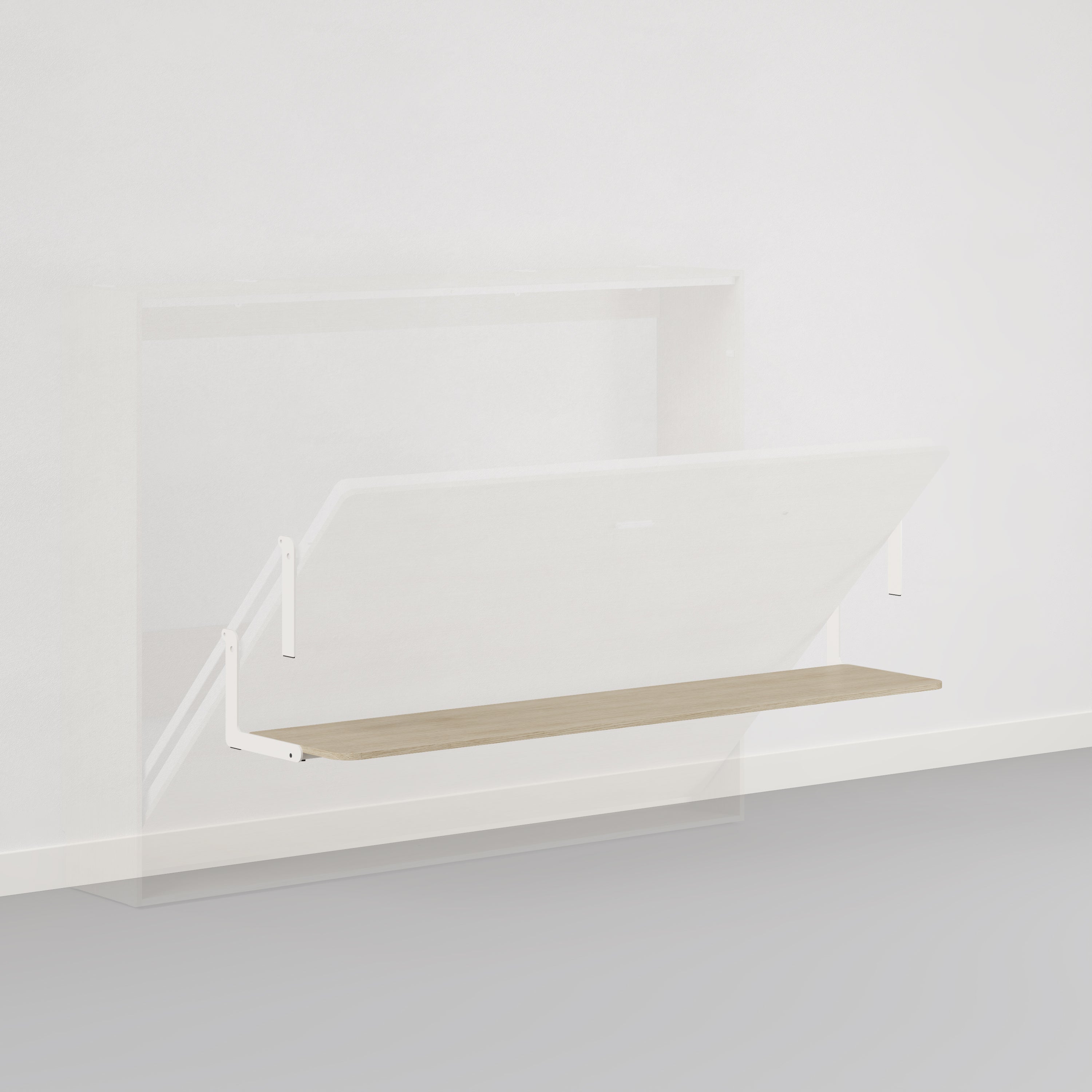
A Murphy bed with a desk solves it. Desk or sofa combo beds allow multifunctional designs in limited space, and many hideaway beds integrate furniture functionality such as desks or shelving. On many desk models, the work surface stays level when the bed comes down, so you don’t have to clear it every time.
If you’re thinking about a dedicated office setup, size matters. A twin works for occasional solo guests. A queen handles couples but takes more wall space.
Browse Murphy beds with desks, or add a desk to your frame with Lori Bed upgrades.
Best Hideaway Bed for Studio Apartments

In a studio, the bed usually takes up the biggest chunk of the floor. Put it away, and the same space becomes a living room.
Modern hideaway beds enhance aesthetic cleanliness in compact living spaces. A Murphy bed against one wall frees the center of the room for a sofa, rug, and table during the day. Good layout ideas for studios: place the bed on the wall opposite the kitchen, keep the open footprint clear of heavy furniture, and use a rug or shelving to mark the sleeping zone.
Renters should check with their landlord before anything is purchased. Murphy beds are attached to wall studs, which may need approval. If wall mounting is off the table, a cabinet bed is the fallback.
Shop all Lori Murphy Beds and filter by size and orientation for your studio.
Best Hideaway Bed with Desk or Storage
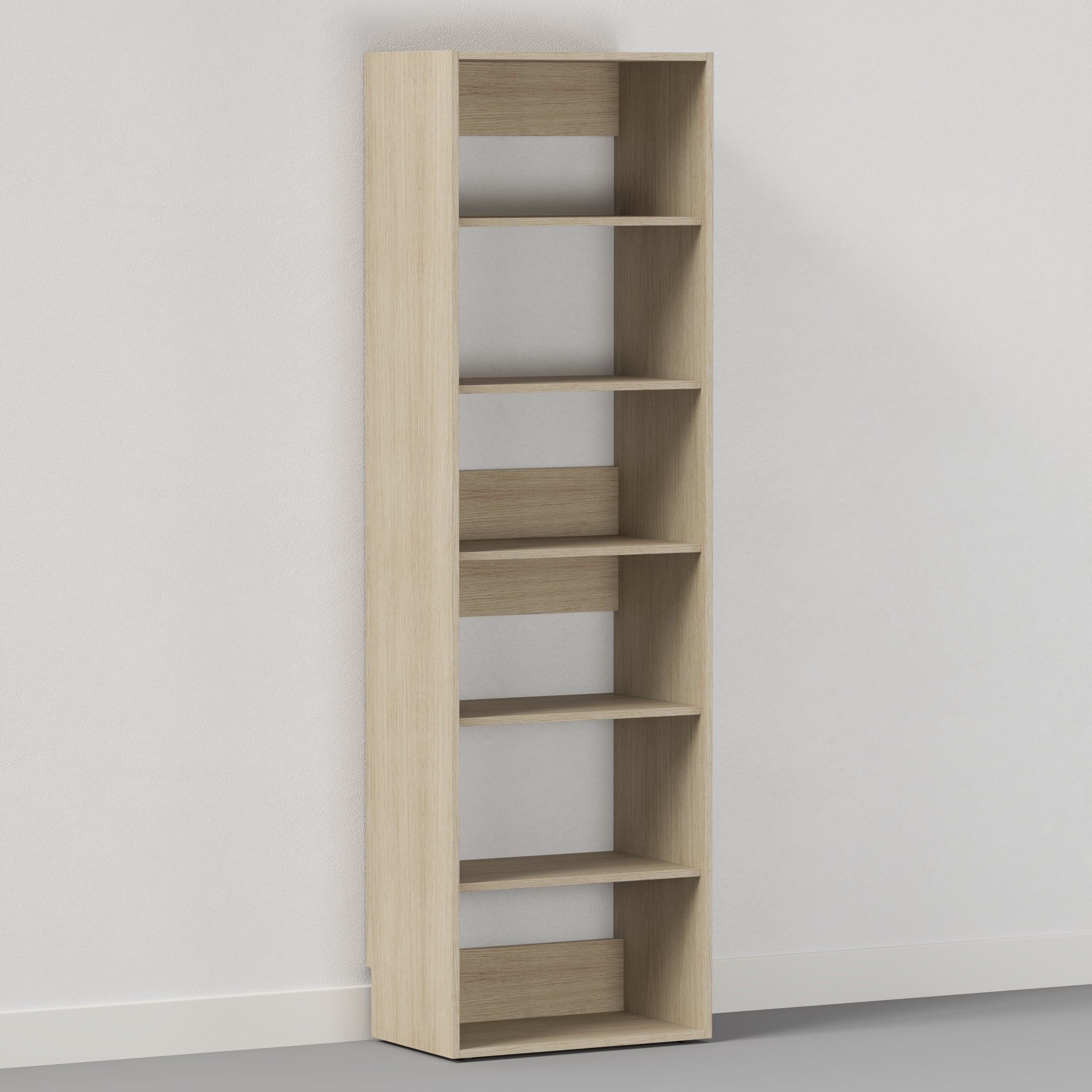
Built-in shelving or desks in hideaway beds reduce clutter and improve organization. The cabinet works as furniture all day, so the wall earns its keep even when the bed is up.
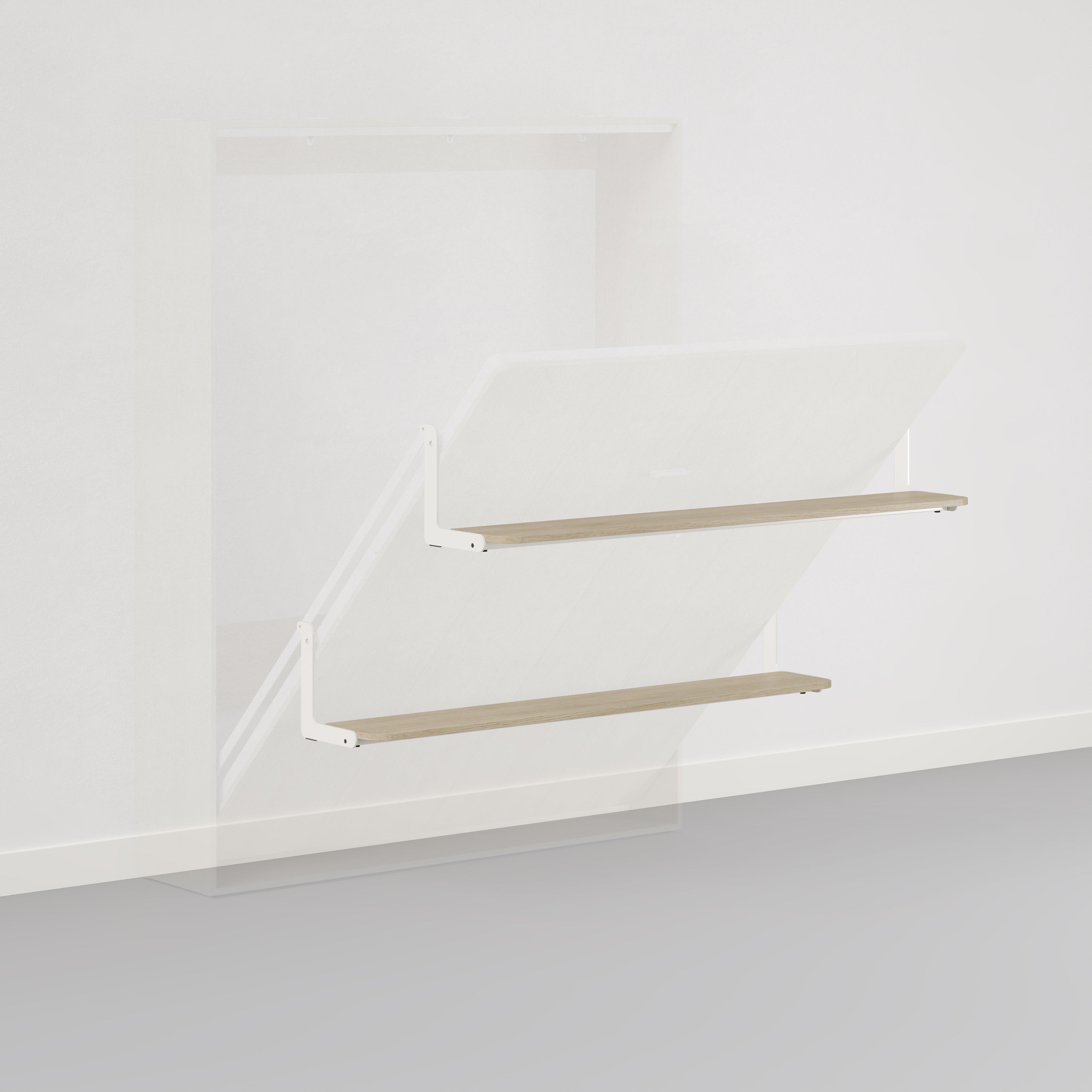
Pick the add-on based on how you’ll use the room. Here are a few ideas. Shelving suits guest rooms and studios that need display and storage space. A desk suits offices and kids’ rooms. Some setups combine both. If you’re after a dresser-style unit, a Murphy Bed Dresser Combo is also worth a look.
Hideaway Bed Mattress
Not every mattress is compatible with a wall-mounted bed system. Thickness is the first filter: The Lori Bed fits a mattress up to 10 inches thick, and the YouLift 2.0 Bed fits up to 12 inches. Under 8 inches lacks support; over 12 inches, and the cabinet may not close cleanly. Sofa pull-outs are limited to 4 to 5 inches by their three-section design, which is why sofa bed comfort has a ceiling.
For Murphy beds, memory foam is the most practical choice. It compresses without bunching, rebounds quickly, and handles repeated tucking cycles without degrading. Look for a minimum density of 3 lb/ft³. Innerspring works but can creak over time. Hybrid foam-over-spring is a reasonable middle ground. Avoid pillow-top mattresses entirely — the extra layer compresses unevenly when stored vertically and develops permanent indentations.
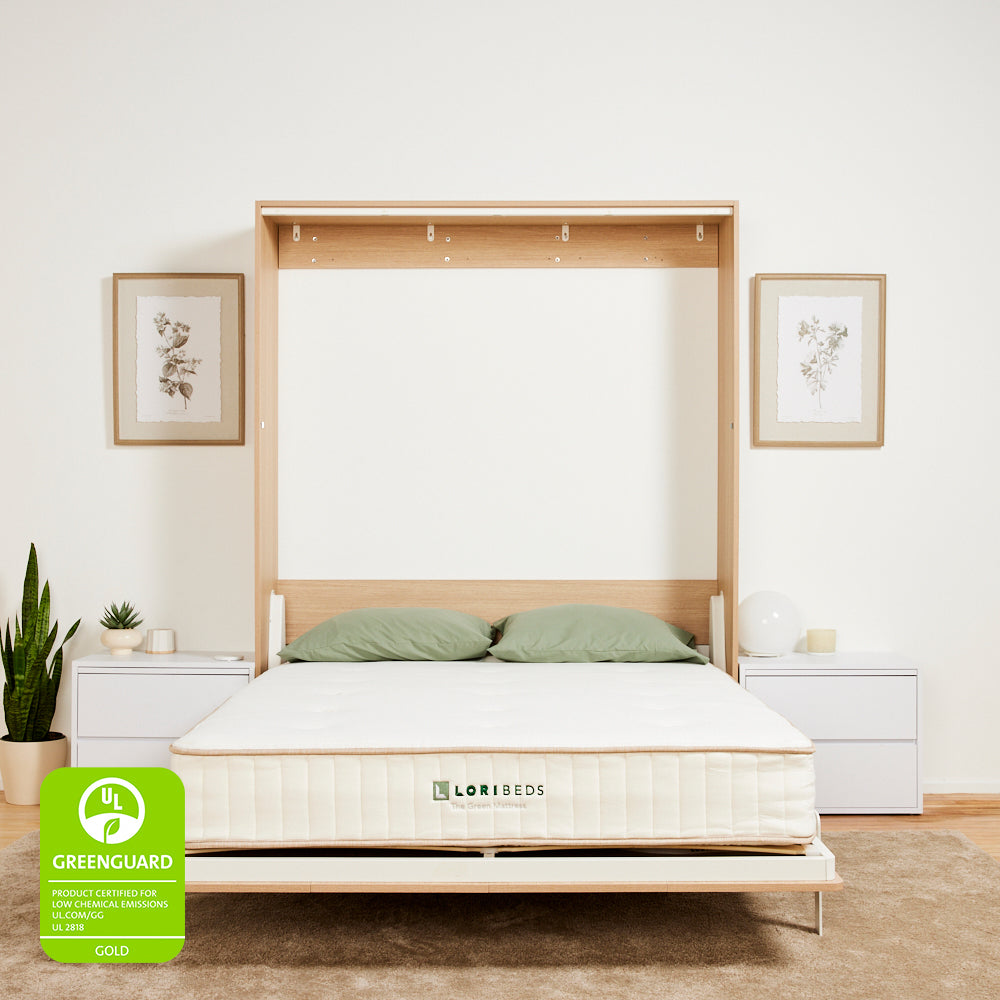
The Lori Mattress is designed specifically for Murphy beds: pocketed coils over cooling foam, hand-tufted, with an organic cotton cover. Medium-firm feel, 10-year warranty, and available in queen and twin to match the Lori Bed frame. The Lori Beds collection also includes the YouLift Mattress and the Green Mattress for different priorities.
See the Lori Beds mattress collection, sized and tested specifically for Murphy bed use.
Frequently Asked Questions
What is a hideaway bed?
A hideaway bed is a bed that tucks into a wall, cabinet, or piece of furniture when it’s not in use. Common types include Murphy beds, sofa beds, cabinet beds, daybeds, and trundles. They let one room work as an office, living area, or guest room.
What is the best hideaway bed for small spaces?
A Murphy bed. It stores flush in the wall and frees the full floor, which no other type does. In rooms with low ceilings or under-window walls, a horizontal model like the queen horizontal Lori Bed fits better.
Is a Murphy bed the same as a hideaway bed?
A Murphy bed is one type of hideaway bed. “Hideaway bed” is the broader category, covering sofa beds, cabinet beds, trundles, and more. Murphy beds are the type best suited to nightly use.
Are hideaway beds comfortable for everyday use?
Murphy beds are. They use a slatted base and a full-thickness mattress, the same setup as a conventional bed. Sofa beds and rollaways use thin mattresses and work better for occasional guests.
What is better: a Murphy bed or a sofa bed?
For sleep, a Murphy bed. It holds a real mattress and clears the floor when stored. A sofa bed wins only if you need everyday seating more than a comfortable bed. If you host often, the Murphy bed is the better buy.
What size hideaway bed should I choose?
Choose who’s sleeping on it and how you plan to use the room. A twin suits kids, solo guests, and narrow walls. A queen suits couples and primary sleep spaces. Measure the open footprint plus 12 to 18 inches of side clearance before you order.
Can a hideaway bed work in a home office?
Yes. A hideaway bed with a desk gives you a full workspace by day and a guest bed at night. It’s one of the most common reasons people buy one. See Lori’s Murphy beds with desks for options.
Which hideaway bed works best for guests?
A queen Murphy bed with a mattress built for wall-bed use. Guests get a proper bed instead of a pull-out. The queen vertical Lori Bed is the standard pick, and the horizontal version suits low ceilings.
How much does a hideaway bed cost?
Trundles, portable beds, and futons sit at the low end, and sofa beds land in the middle. Murphy beds cost more upfront: the YouLift 2.0 queen starts at $2,699, and the Lori Bed queen at $3,949. Over years of use, the cost per night drops below portable options.
What mistakes should I avoid when buying a hideaway bed?
The biggest is measuring the bed closed instead of open. Buyers also pick thin pull-outs for frequent guests, choose pillow-top mattresses that don’t store well, and ignore ceiling height. Measure twice.
Which Lori Bed option fits my use case?
Match the bed to the room. The Lori Bed queen vertical suits guest rooms and primary sleep spaces with standard ceilings. The queen horizontal fits low ceilings and under-window walls. The twin suits kids’ rooms and home offices, and the YouLift 2.0 is the lower-priced queen.
Which product should I look at next?
Start with the frame, then the mattress. Pick your size and orientation from the Lori Murphy bed collection, add a desk or shelves if the room has a second job, and finish with a mattress made for Murphy beds.
Final Thoughts
Hideaway beds are the perfect solution for blending comfort, style, and functionality in everyday life. There’s a hideaway bed for every need, whether it’s maximizing space or making your room multifunctional.
Different hideaway bed designs, such as Murphy beds, offer a myriad of options and possibilities for your living arrangements. Considering your home’s layout, bed preferences, and budget will lead you to the hideaway bed that will surely provide long-term value.
By
Kyle Marquardt