





The modern homeowner faces a persistent dilemma: how to sleep comfortably or accommodate guests without sacrificing valuable floor space to a dedicated bed. This conflict between functionality and footprint is the driving force behind the resurgence of space-saving furniture.
When comparing the Wall Bed vs. Murphy Bed, it is common to assume the terms are identical; however, important mechanical and design differences actually set them apart. We will break down these distinctions to help you select the right solution for your specific floor plan, functionality needs, and preferred lifting mechanism.
What Is a Wall Bed?
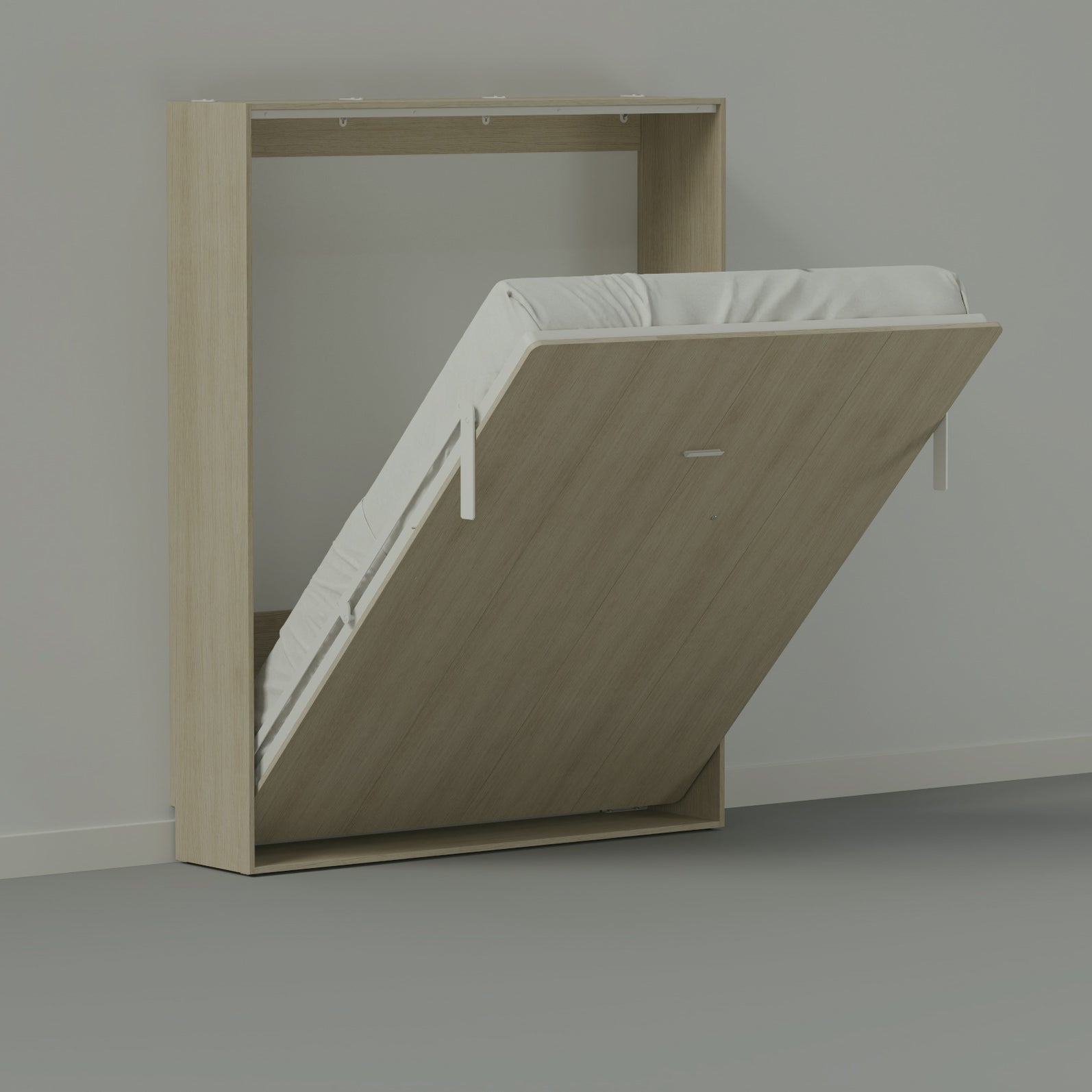
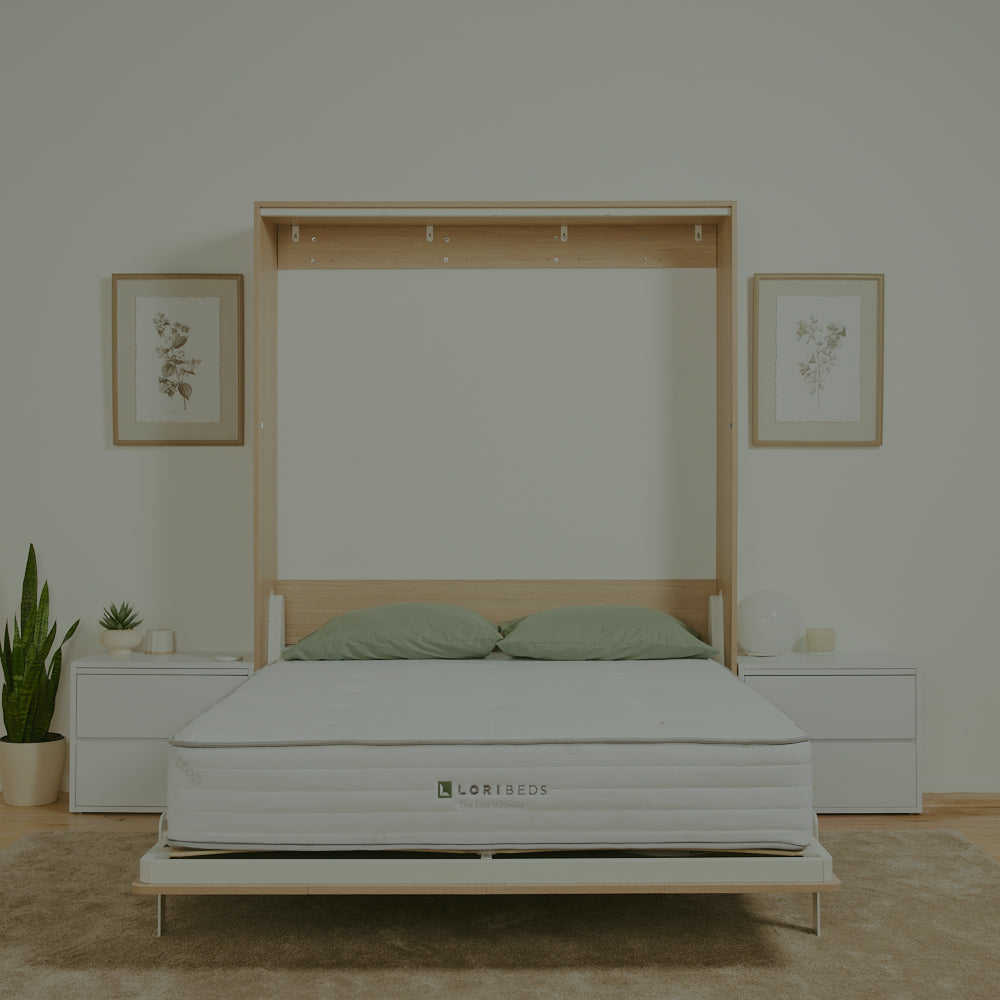
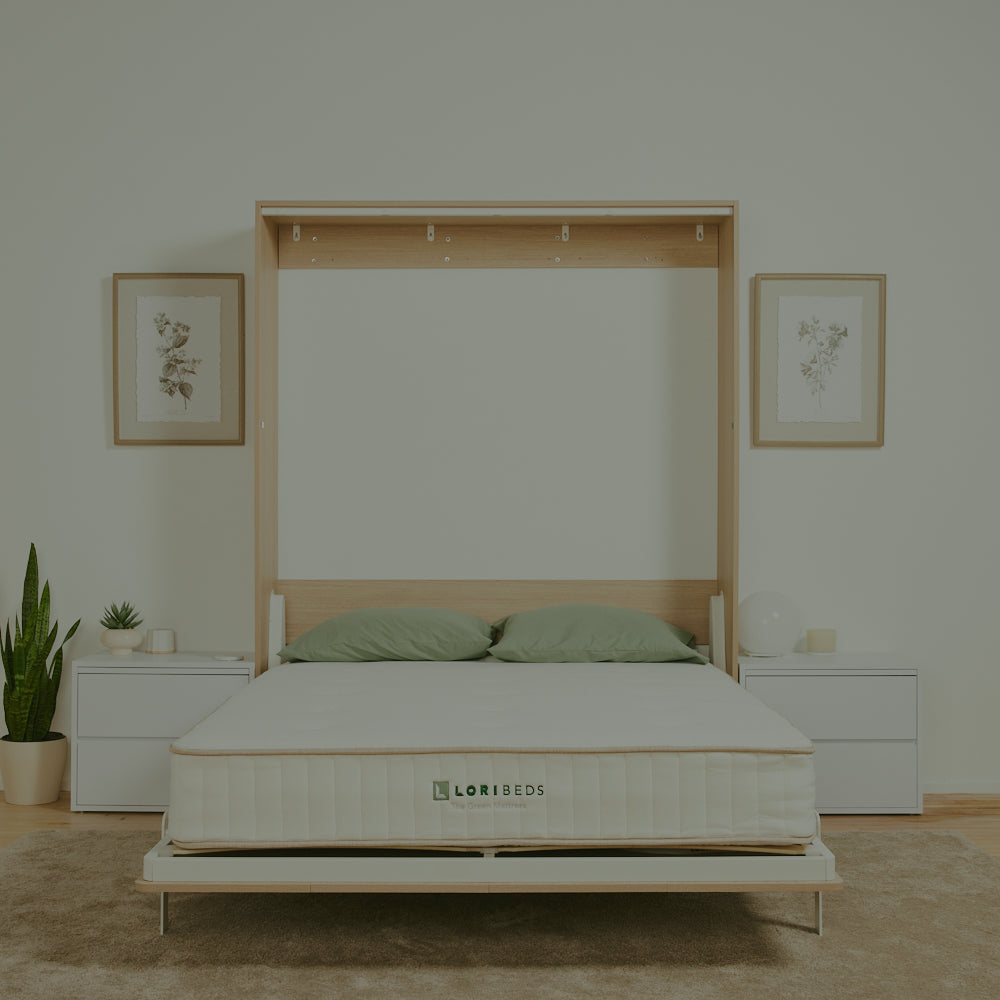
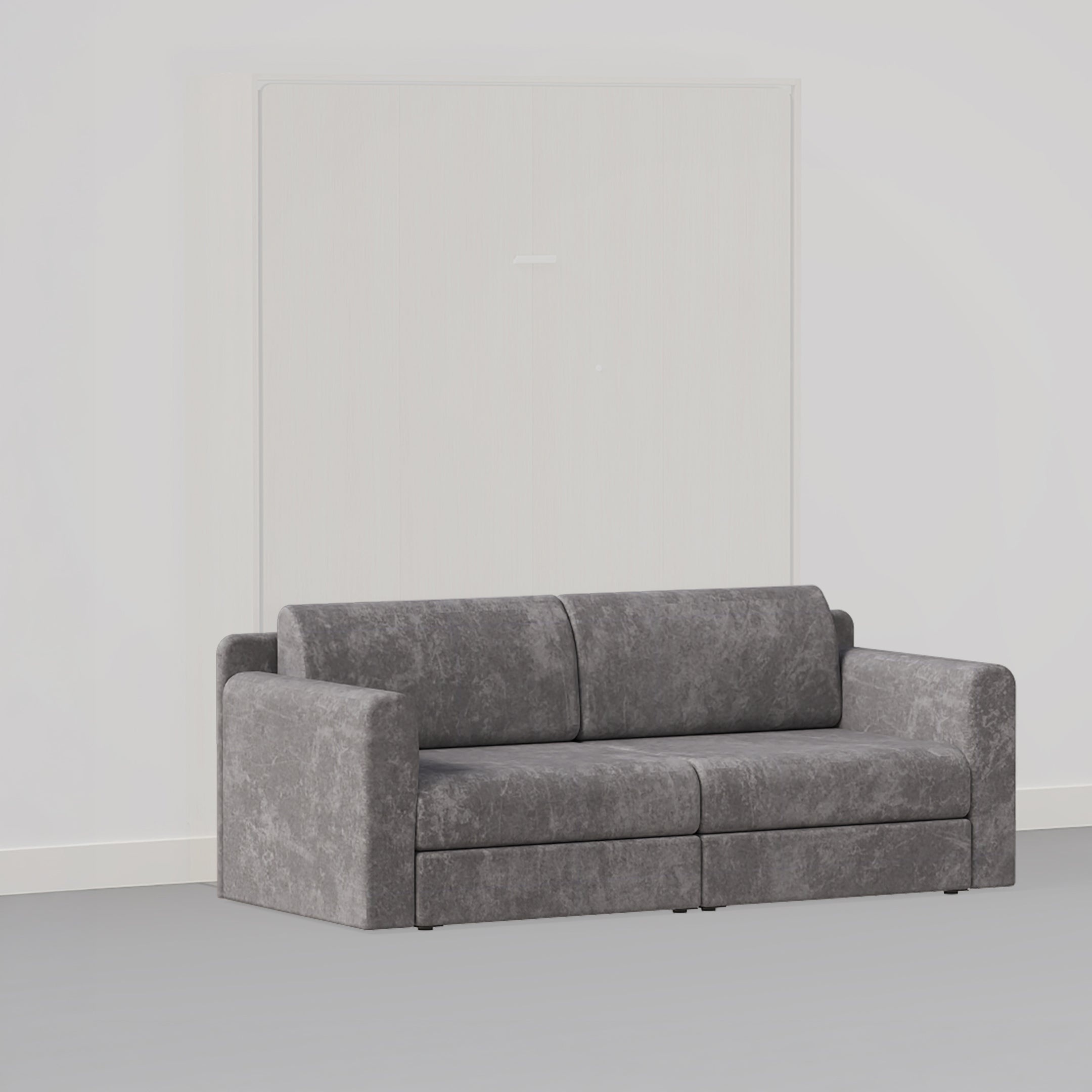
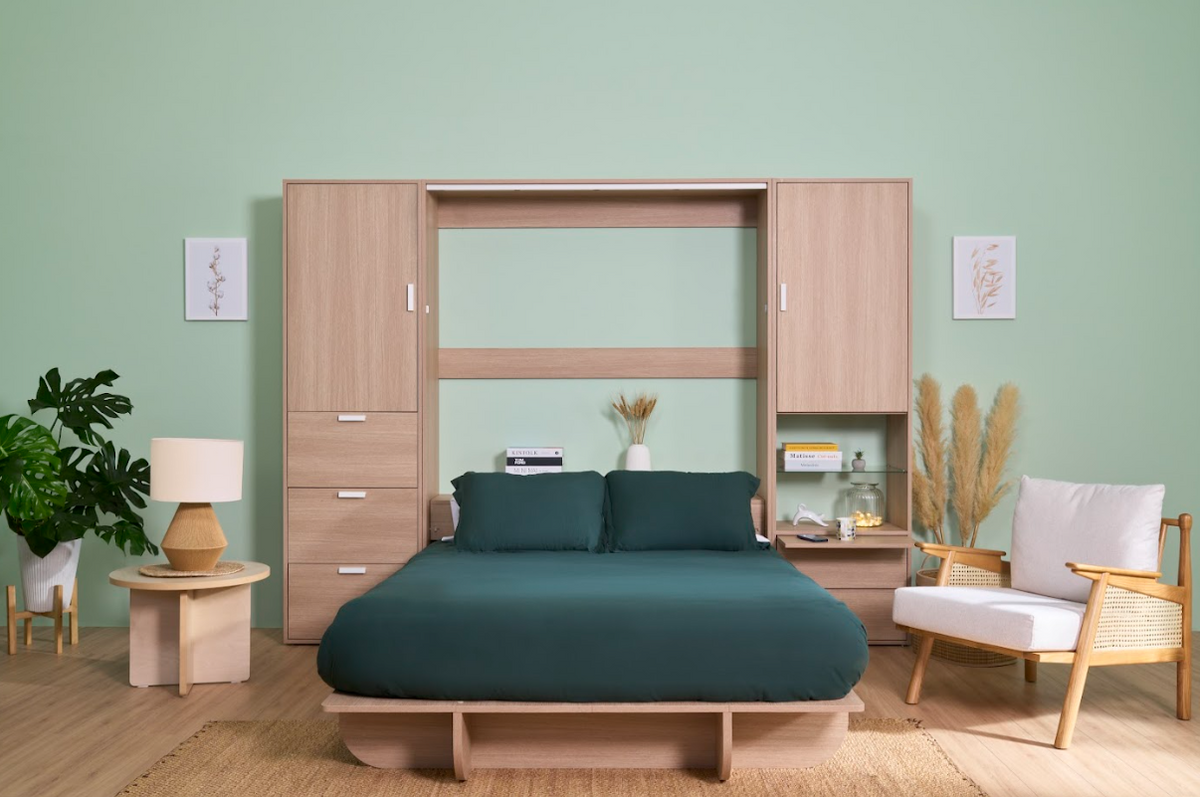
A wall bed is aspace-saving bed hinged at one end that can be stored vertically or horizontally, flat against a wall or inside a specialized cabinet when not in use. Commonly referred to interchangeably with Murphy beds, modern wall beds serve as dual-purpose furniture to maximize floor space in small rooms or home offices.
Unlike a standard bed that occupies permanent floor space, a wall bed remains tucked away and out of sight until needed, making it one of the most practical space-saving wall beds for both everyday living and occasional guest use.
What’s the Difference Between a Wall Bed and a Murphy Bed?
The primary difference is that a Murphy bed is actually a specific type of wall bed. The original Murphy bed was patented by William Lawrence Murphy in the early 1900s, designed to tuck a traditional bed into a closet to reclaim floor space.
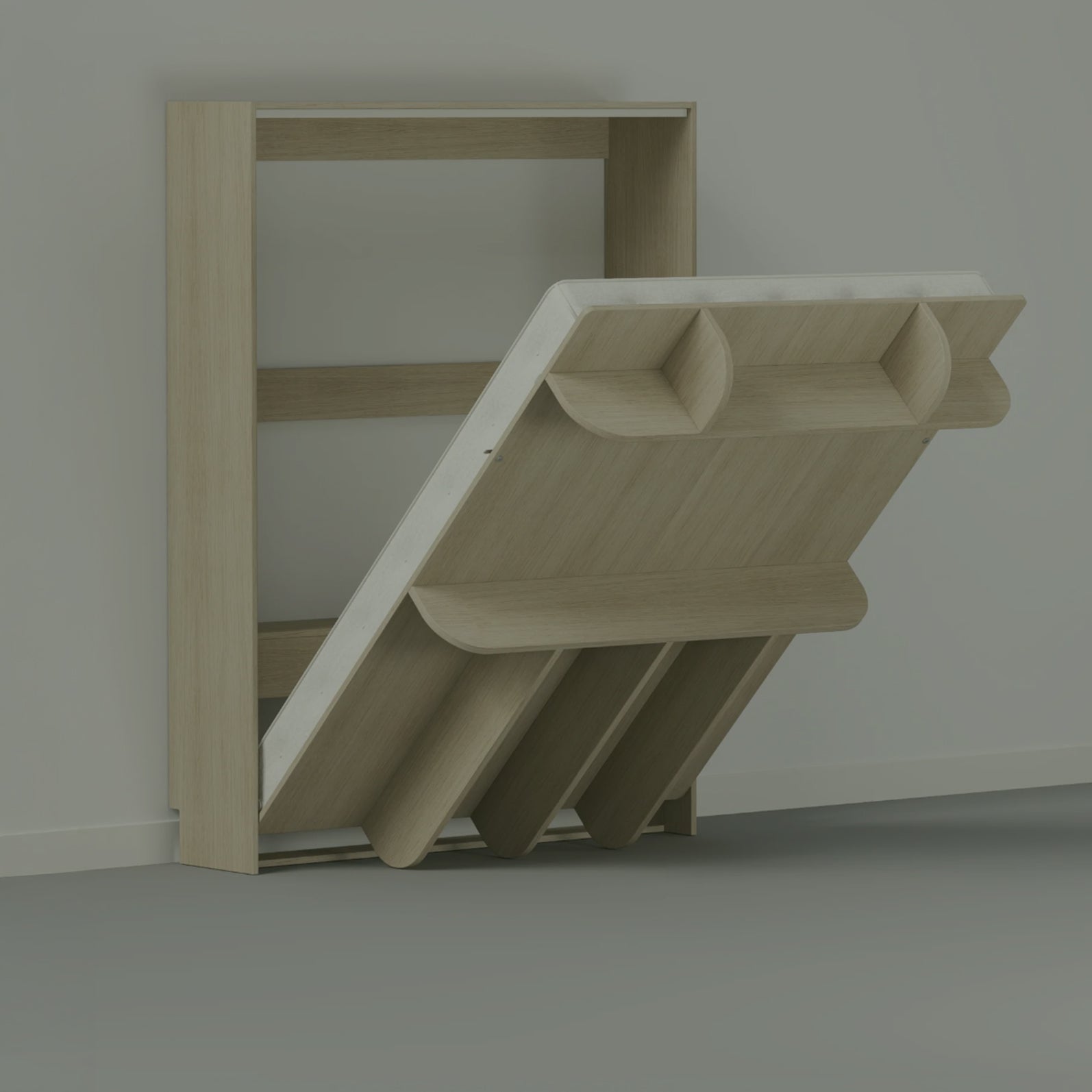
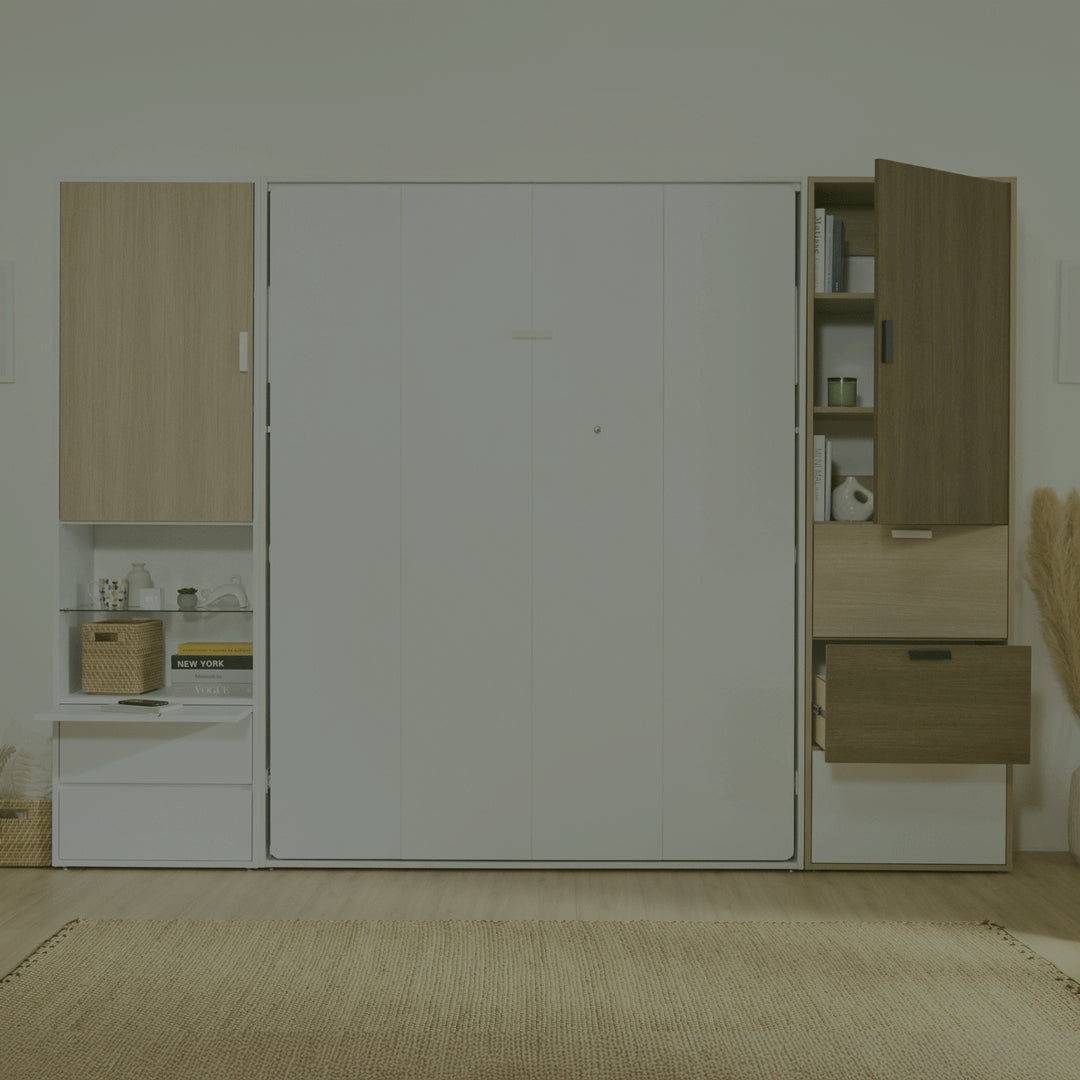
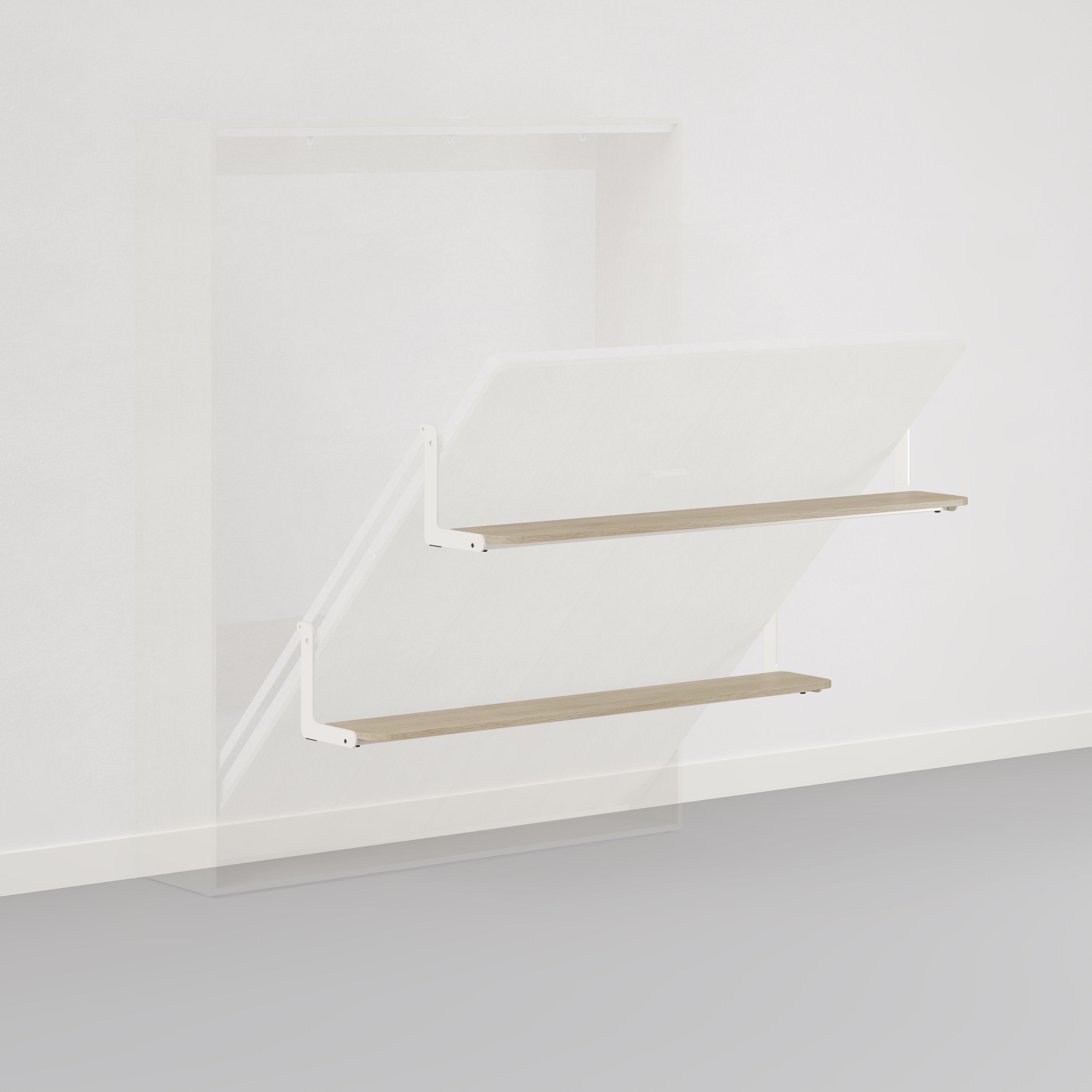
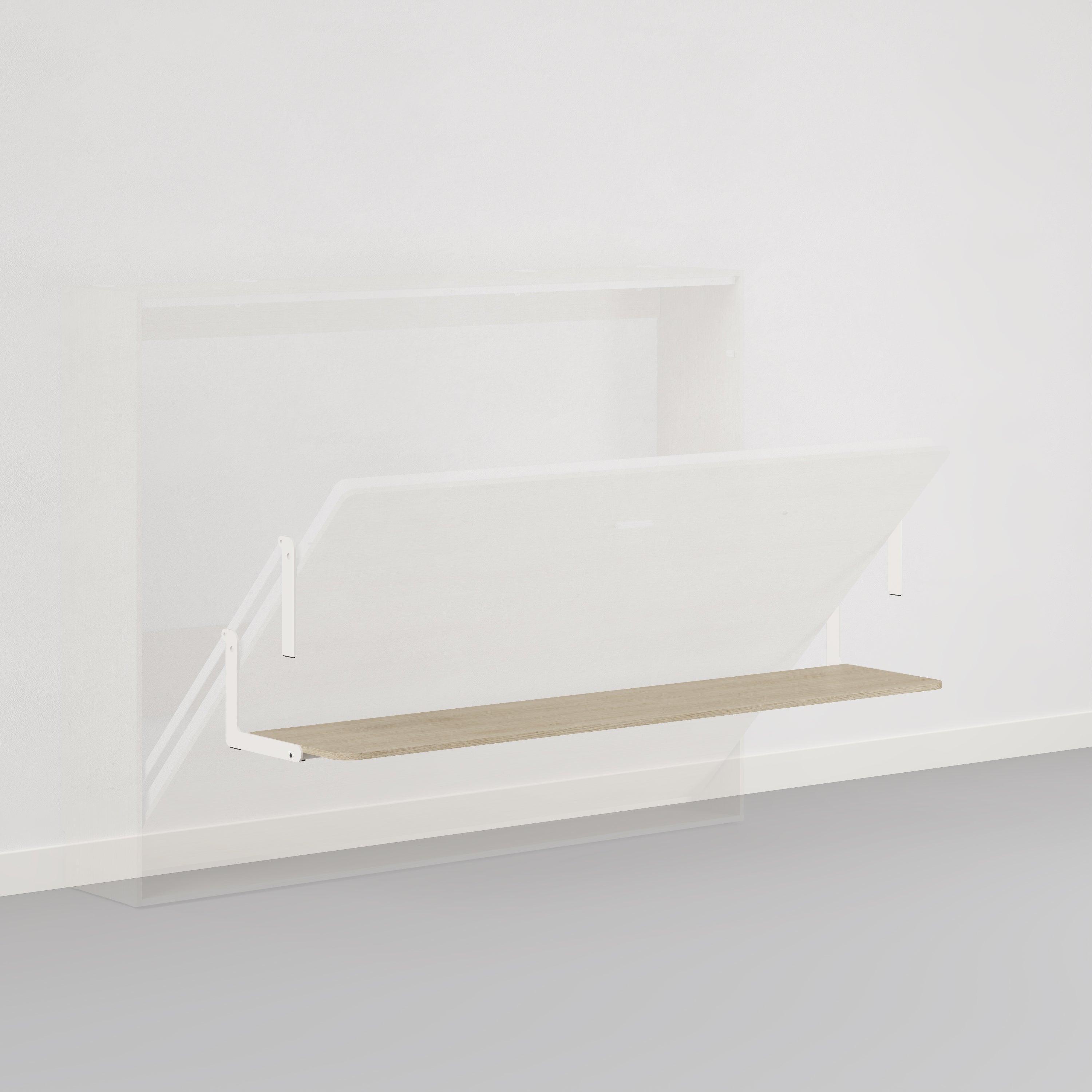
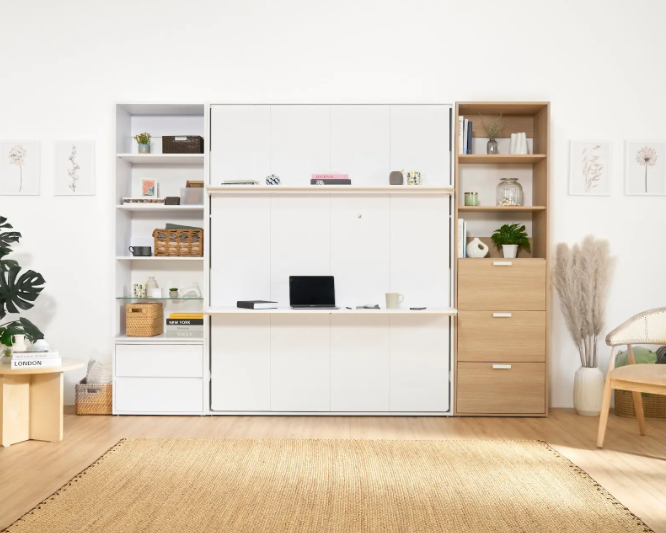
In modern terms, a traditional Murphy bed typically refers to a system that uses a metal frame and a spring mechanism, which may attach to the floor or a wall. Conversely, the term wall bed has evolved to describe more modern, cabinet-style units. These often feature a piston-lift mechanism, higher-quality wood construction, and built-in furniture features such as shelves or a desk.
While both serve the goal of space saving, the wall bed is often seen as a more seamless integration into a room's decor, whereas a Murphy bed is often a more utilitarian pull-down solution.
Key differences:
- Lifting mechanism: A traditional Murphy bed typically uses a spring mechanism that relies on high tension to lift the mattress. Modern wall beds often utilize a piston lift mechanism or a manual pivot for a smoother, quieter, and more controlled movement.
- Construction & aesthetics: Murphy bed options often feature an industrial metal frame that remains visible. Modern wall beds are built as cabinet-style furniture, using high-quality wood to ensure a seamless integration with your other furniture.
-
Installation: The original Murphy bed often requires secure anchoring to both the floor and the wall. Most modern wall beds only require attachment to wall studs, making them a more DIY-friendly space-saving solution that protects your flooring.
- Space & orientation: Both can be oriented vertically to save wall space or horizontally for rooms with a lower ceiling height. Many wall bed designs include built-in shelves or a desk to maximize every inch of square footage.
- Cost & value: While a traditional Murphy bed may be a more budget-friendly choice, a wall bed is a long-term investment in quality, offering the aesthetic of built-in furniture that adds value to a studio apartment or guest room.
Upgrade to a modern wall bed and experience the quality of The Lori Bed.
AT A GLANCE
What Is a Wall Bed?
What’s the Difference Between a Wall Bed and a Murphy Bed?
Types of Wall Beds and Murphy Beds
The Guest Room Paradox
The Origins: William Lawrence Murphy’s Design
Wall Bed vs. Murphy Bed: Comparison at a Glance
Mechanical Differences: Springs vs. Pistons
Construction and Room Aesthetics
Installation and Structural Requirements
Who Should Buy a Wall Bed?
Common Misconceptions About Wall Beds
FAQs
Which One Is Better For Your Space?
Types of Wall Beds and Murphy Beds
Not all wall beds and Murphy beds are built the same way. Understanding the orientation options helps you choose the right fit for your room.
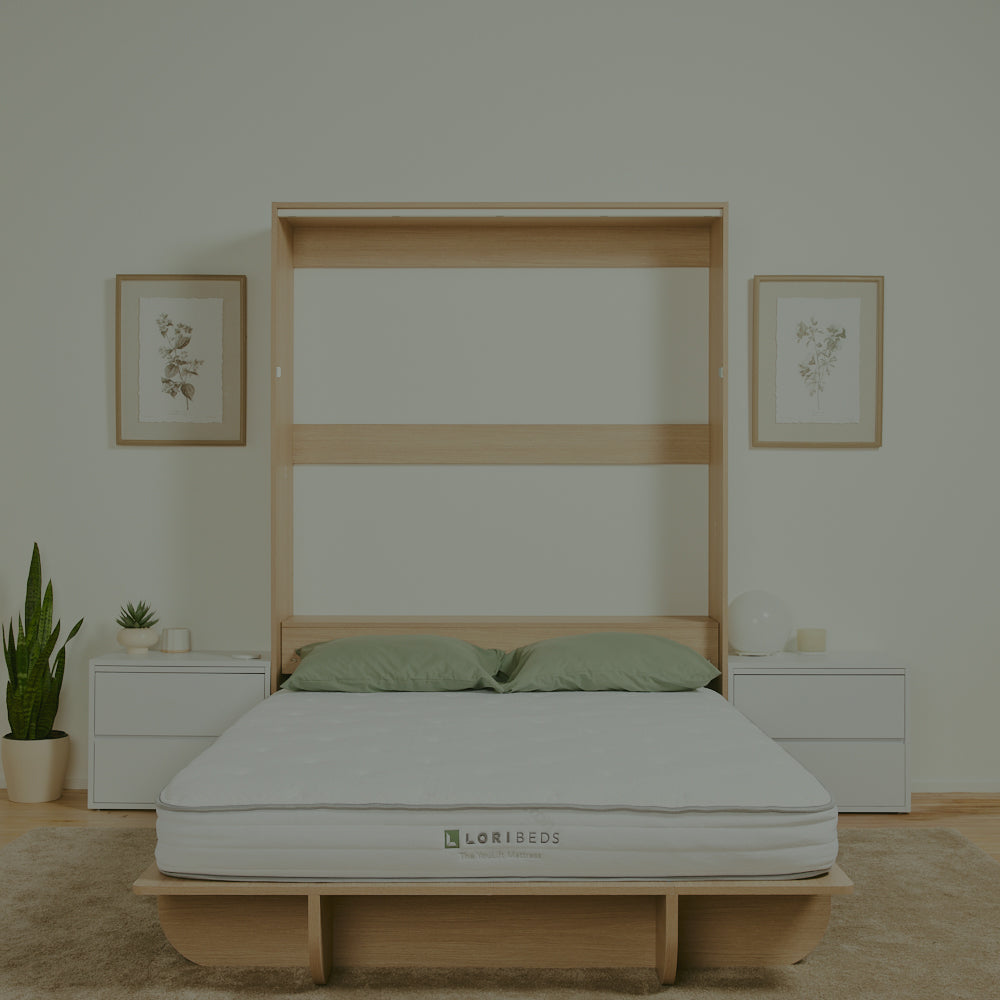
Vertical Wall Beds
- The classic style.
- The bed lowers from the top, with the mattress stored upright when not in use.
- Ideal for rooms with higher ceilings.
- Works well in standard bedrooms, studio apartments, and guest rooms.
- A twin vertical wall bed typically requires 4 to 6 feet of wall space and 5 to 8 feet of floor clearance, depending on orientation.
- A queen vertical unit typically needs 6 to 8 feet of wall space and comparable floor clearance.
Horizontal (Lateral) Wall Beds
- The bed pivots out from the side rather than dropping from above.
- A strong choice for rooms with lower ceilings, lofts, or narrow layouts where a vertical drop is not practical.
- A twin horizontal wall bed may require 6 to 8 feet of wall space, while a queen horizontal unit typically needs the same range, depending on the specific model and configuration.
Hidden wall beds with integrated cabinetry
Hidden wall beds disguise the unit entirely within a cabinet, bookshelf, or desk surround. When closed, the room looks like a standard living space. These are the most visually seamless options and work in almost any room where you want full design flexibility.
The Guest Room Paradox
You have a room in your house or apartment that you wish to use as a home office, a yoga studio, or a playroom. Yet, you also need a guest room for the occasional visitor. A standard queen-size bed consumes approximately 35 square feet of floor space.
In a 10 x 12 room, this renders nearly 30% of the room unusable for 95% of the year. The alternative, an air mattress or a sleeper sofa, offers an uncomfortable sleep experience that no host wants to provide. You are stuck paying a mortgage or rent on square footage that is effectively held hostage by a mattress.
To reclaim this extra space, you turn to the wall bed.
The Origins: William Lawrence Murphy’s Design
The original Murphy bed design by William Lawrence Murphy was born out of necessity in a small San Francisco apartment. By mounting a full-size bed frame to a pivot point, he could transform his bedroom into a parlor for entertaining.
For decades, the vast majority of these units were traditional wall beds that relied on heavy counterbalance systems. Today, the market has expanded. You now have Murphy bed options ranging from a simple tri-split mattress to elaborate single-piece units with desks or shelf integrations.

Ditch the complicated springs and choose a simple, durable design.
Wall Bed vs. Murphy Bed: Comparison at a Glance
|
Feature |
Traditional Murphy Bed |
Modern Wall Bed |
|
Primary Mechanism |
Spring mechanism |
Piston lift mechanism / Manual |
|
Mounting Requirement |
Floor and wall |
Primarily wall studs |
|
Frame Material |
Metal frames |
Wood (Plywood or MDF) |
|
Design Style |
Hidden in a closet or a simple box |
Cabinet style with built-in desk/shelves |
|
Ease of Installation |
Complex (loading springs) |
Moderate (DIY friendly) |
|
Available Sizes |
Twin, Full, Queen size |
Twin to Queen |
Mechanical Differences: Springs vs. Pistons
The most significant trade-off between these two styles is the lifting mechanism.
Traditional Spring Mechanisms
The original Murphy bed uses a series of heavy-duty steel springs.
Pros: Adjustable tension.
Cons: Can be noisy, and the springs may suffer from metal fatigue over time. They often require the entire unit to be bolted to the floor, which can damage certain types of flooring.
Modern Piston Mechanisms
Many modern wall beds utilize gas-charged pistons.
Pros: Provides a smooth, silent motion. It often includes a safety lock to prevent accidental movement.
Cons: If a piston leaks, it cannot be repaired and must be replaced.
Construction and Room Aesthetics
When choosing between a wall bed and a traditional Murphy bed, consider the available wall space and ceiling height.
Integrated storage
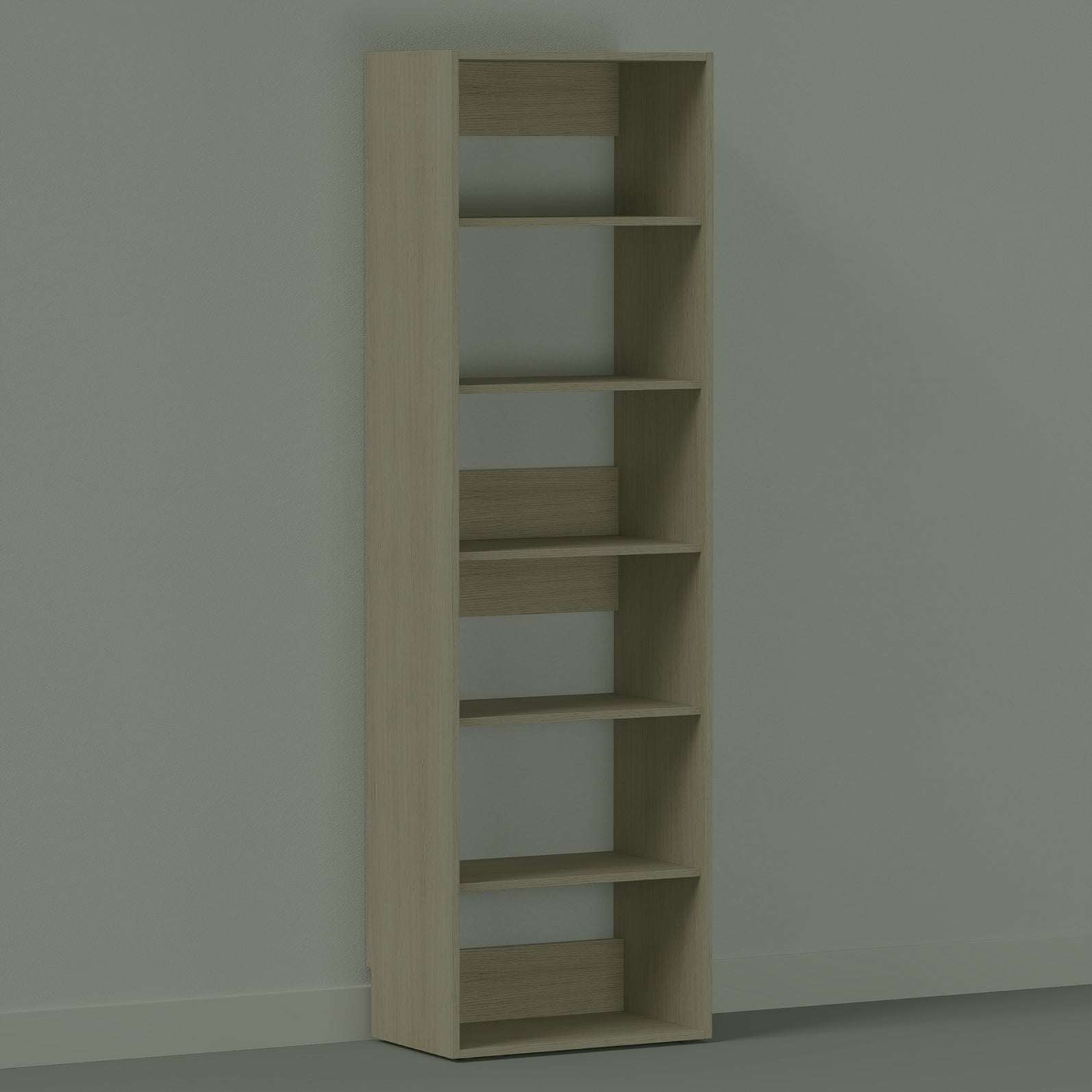
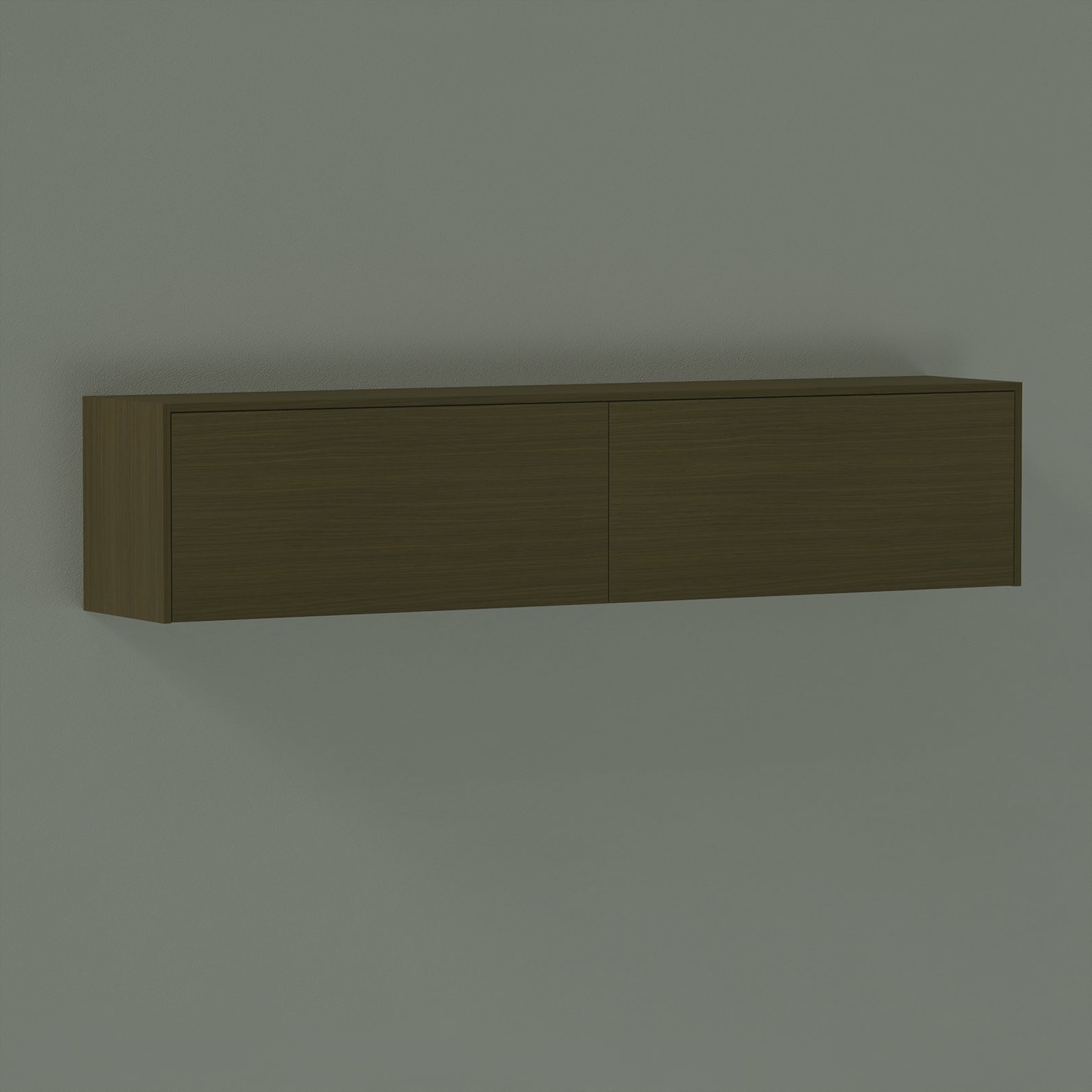
Modern wall beds like The Lori Bed are designed to be built-in furniture. They often feature shelves or a desk on the exterior, allowing you to make the most of every inch of space.
The "Inch Matters" Rule
When measuring your room, remember that piston units often require more wall space width-wise, while spring units might need more depth.
Materials
Traditional Murphy beds often use a mix of metal and particle board. Premium wall beds use solid wood or furniture-grade plywood for a perfect fit and high-end style.
Installation and Structural Requirements
A major factor in the wall bed vs Murphy bed debate is installation.
Safety: Both must be securely anchored. A falling bed is a serious hazard.
Structural requirements: You must locate wall studs to ensure the entire unit is stable.
DIY vs. Pro: Because of the high-tension springs, a traditional Murphy bed often requires professional installation. Modern cabinet-style wall beds are frequently designed for daily use and DIY assembly.
To demonstrate the difference in ease, here’s a walk-through of The Lori Bed assembly process.

Invest in a bed that is built to last.
Who Should Buy a Wall Bed?
A wall bed makes sense in almost any room where permanent floor space is too valuable to dedicate to a bed used only occasionally.
A wall bed is a strong fit if you:
- Have a guest room that doubles as a home office, gym, or hobby room, and want to use that space daily
- Live in a smaller apartment or house where every square foot of floor space has to earn its place
- Have kids' bedrooms that need room to play during the day, but a proper sleeping surface at night
- Run a short-term rental or Airbnb property where you need to accommodate guests without dedicating the entire room to a bed
- Want to transform a multipurpose room without investing in an expensive renovation
- Need a twin or queen sleeping solution that does not permanently define how a room looks or functions
Lori Beds offers custom configurations in twin and queen sizes with a range of cabinetry and modular storage styles to suit your existing furniture and room layout.
Common Misconceptions About Wall Beds
"Wall beds are uncomfortable."
Modern wall beds use a wood platform or a high-quality slat system to support standard mattress types. There is no need for a specialty mattress. Most standard queen or twin mattresses work with a wall bed without any modification.
"They are complicated to open and close."
A quality wall bed opens and closes with minimal effort thanks to gas piston assistance. Lori Beds are designed for daily use, not just occasional guest room conversion.
"Wall beds look like they belong in a hotel utility room."
Modern wall beds from Lori Beds look like finished cabinetry. The units are designed to complement your room, not dominate it.
"Wall beds are not safe."
Space-saving wall beds from reputable manufacturers like Lori Beds are engineered with safety as a primary design requirement. Safety locks, elastic straps for bedding retention, and secure wall mounting all contribute to a stable, reliable unit designed for everyday use.
FAQs
What is a wall bed?
A wall bed is a space-saving bed hinged at one end that stores vertically or horizontally against a wall or inside a cabinet when not in use.
What is the difference between a wall bed and a Murphy bed?
A Murphy bed is the original patented design by William Lawrence Murphy, using a spring-based mechanism stored in a closet or box frame. A wall bed is the broader, more modern category that includes cabinet-style units with piston mechanisms, integrated furniture features, and premium construction. All Murphy beds are wall beds, but not all wall beds are Murphy beds.
Is a wall bed comfortable to sleep on?
Yes. A quality wall bed uses a wood platform or slat base that supports standard mattress types. The sleeping surface is comparable to a standard bed frame. Lori Beds are designed for regular nightly use.
How much wall space does a wall bed require?
For a twin unit, plan for 4 to 8 feet of wall space and 5 to 8 feet of floor clearance, depending on orientation. For a queen unit, plan for 6 to 8 feet of wall space and 6 to 8 feet of floor clearance. Exact requirements vary by model and configuration.
Can a wall bed be installed in almost any room?
Yes. Wall beds work in almost any room with sufficient wall space and floor clearance, including guest rooms, kids’ bedrooms, home offices, studio apartments, and multipurpose rooms. The key requirements are solid wall studs for mounting and enough floor clearance for the mattress to extend fully when the unit is open.
Which One Is Better For Your Space?
If you are looking for a comfortable place for guests to stay in a spare bedroom without occupying the entire room, both options are excellent.
Choose a traditional Murphy Bed if:
- You have a dedicated closet for the bed, or prefer the original design of a spring-loaded metal frame.
Choose a modern Wall Bed if:
- You want seamless integration with your other furniture, extra space via built-in shelves, and a space-saving bed that enhances your space's aesthetic.
Are you ready to reclaim your floor space without the headache?
Looking for a Murphy bed for your space?
Lori Beds offers modern Murphy beds built for small spaces, guest rooms, home offices, and everyday use. Explore vertical, horizontal, queen, and twin options, plus add-ons like desks, shelves, and storage.
Find a space-saving Murphy bed


Leave a comment
All comments are moderated before being published.
This site is protected by hCaptcha and the hCaptcha Privacy Policy and Terms of Service apply.