

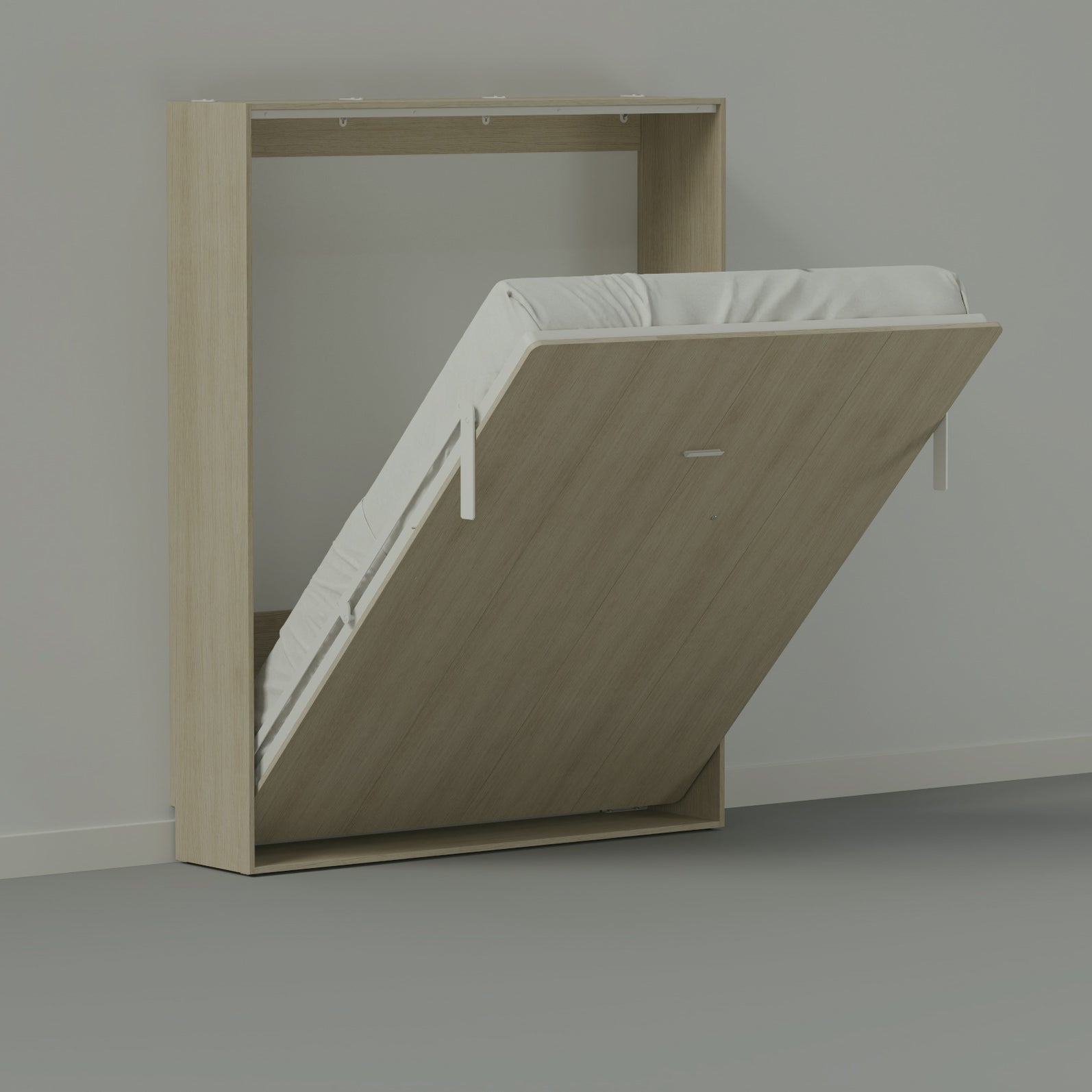

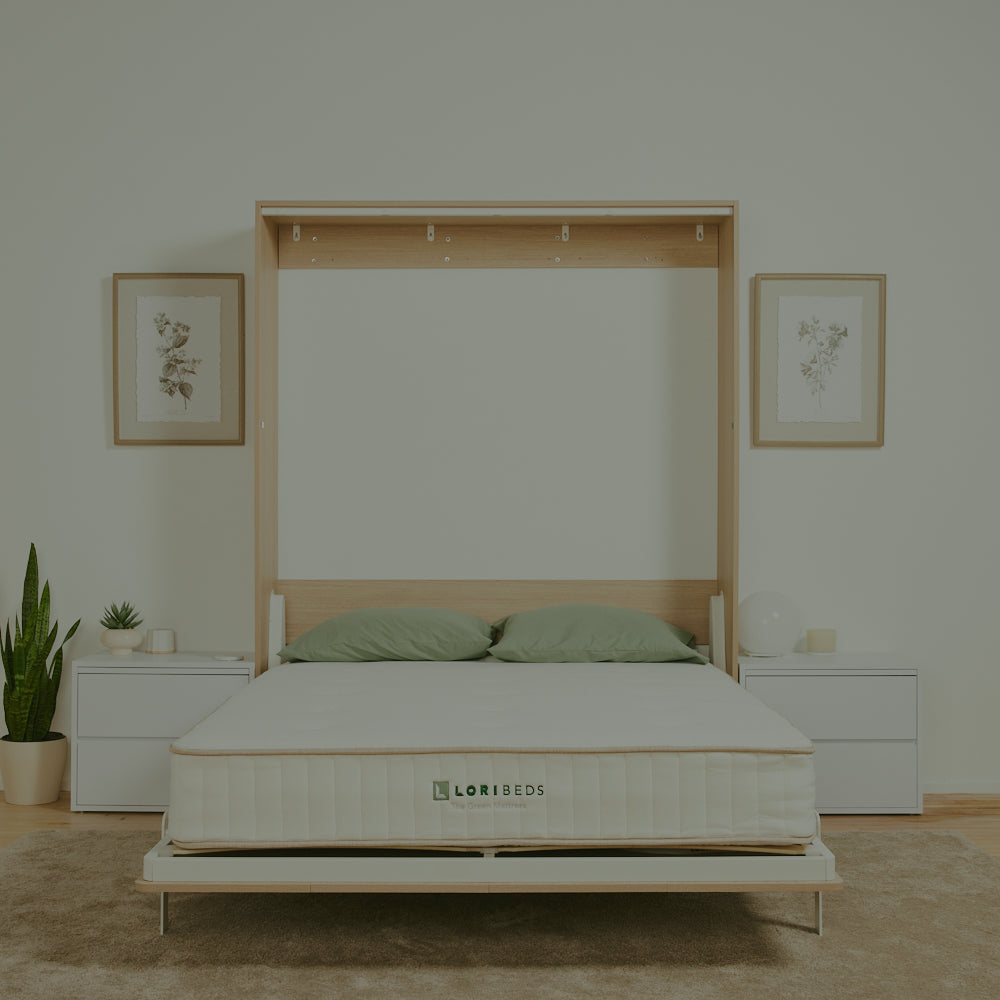
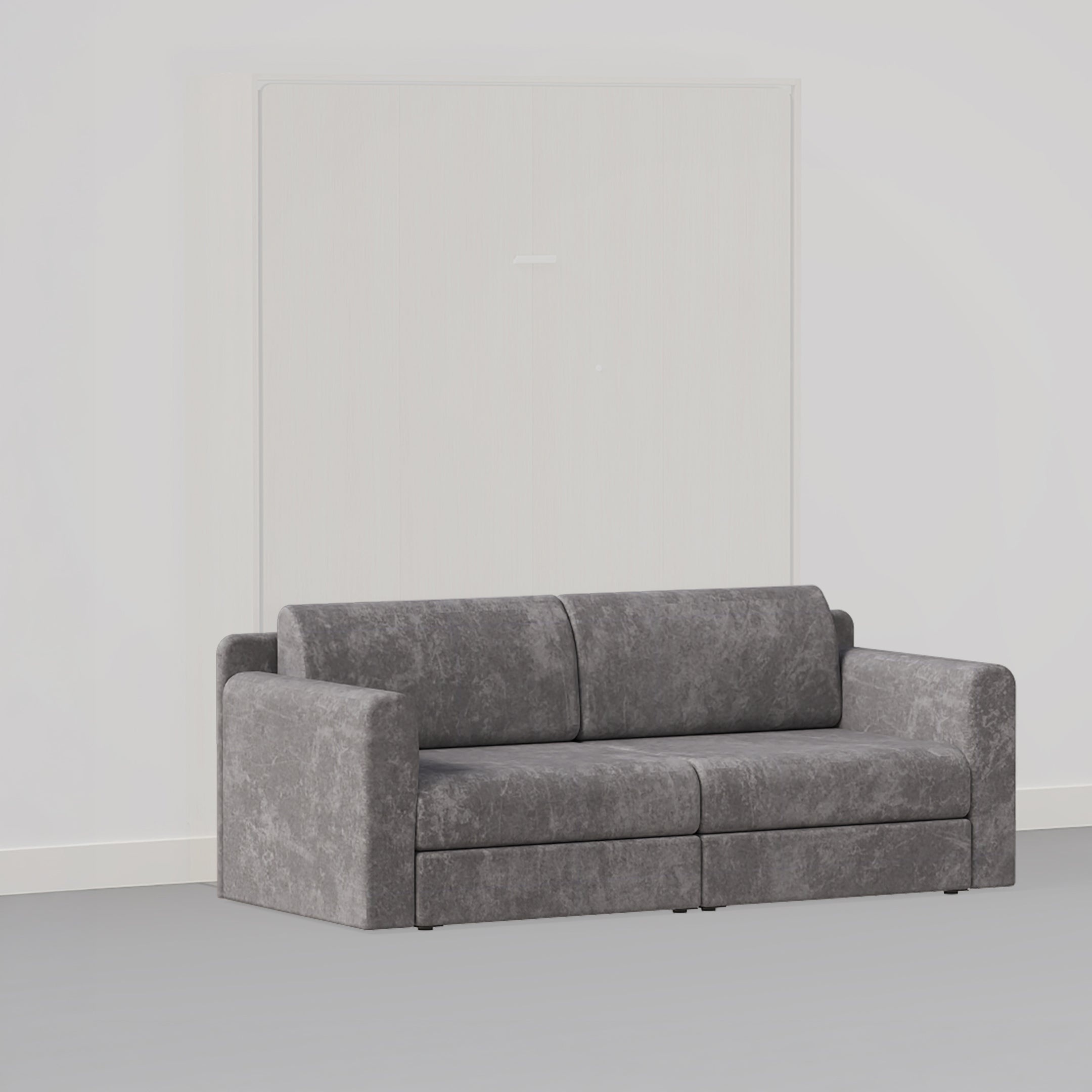

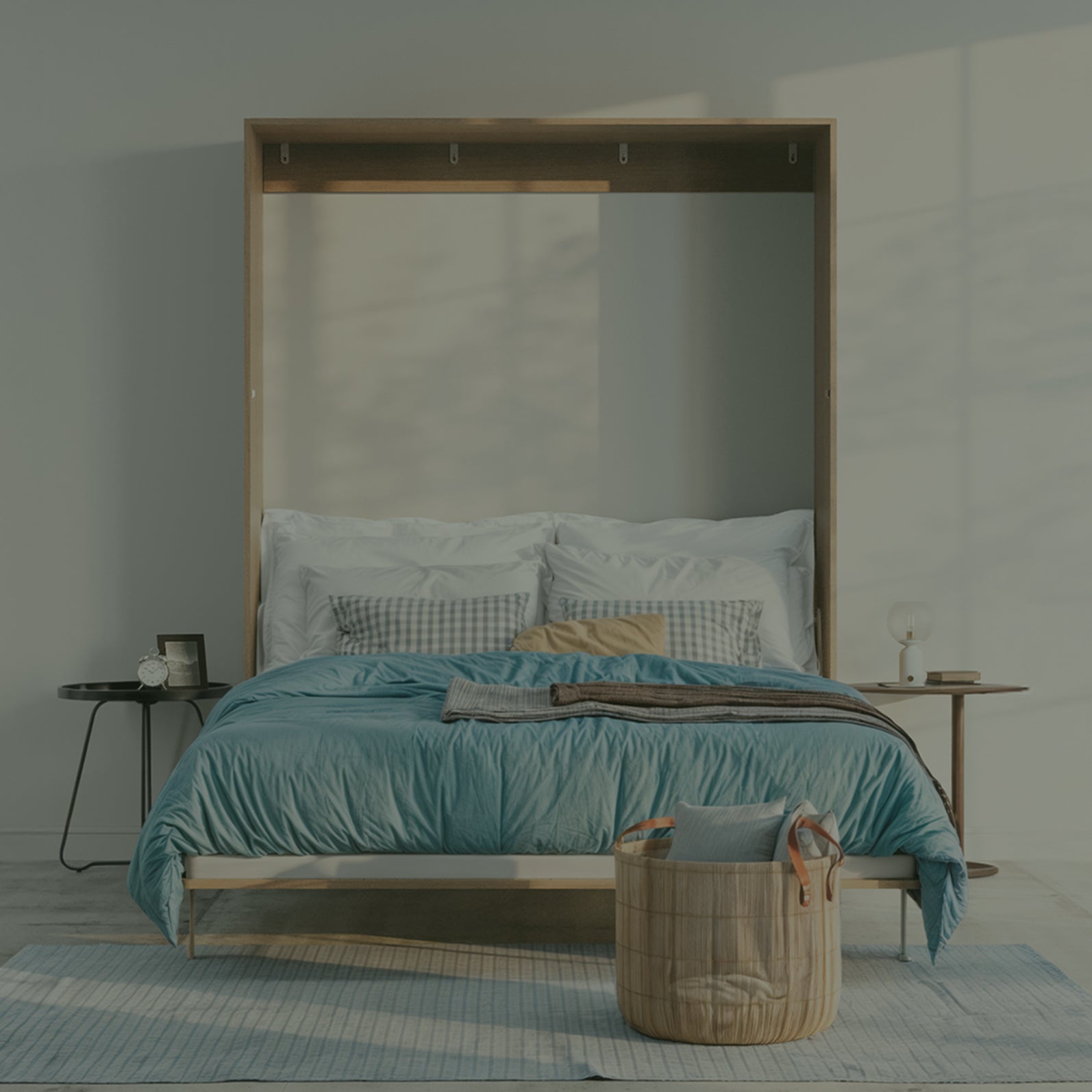

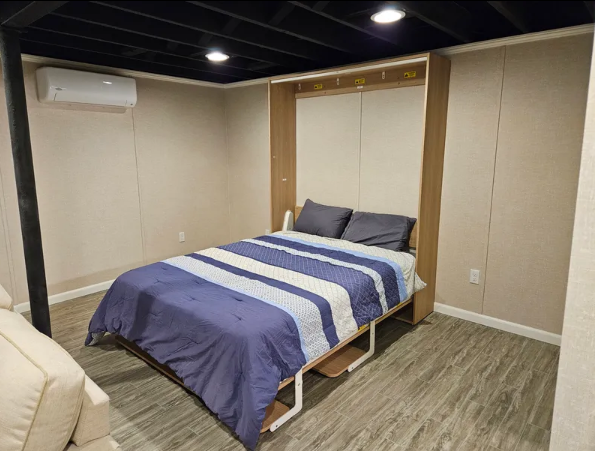
The stowaway wall bed has come leaps and bounds since its invention in the early 1900s. Today’s Murphy beds are credited as practical space-savers. They also integrate seamlessly into small spaces without sacrificing style.
Murphy bed benefits and drawbacks at a glance:
|
Pros |
Cons |
|
Daily Space Recovery (the room is usable again the moment the bed lifts back up) |
Limited Placement Options (needs a flat, level wall with no odd angles or low ceilings) |
|
Multi-Functional Design (dual-purpose room, not just a bed) |
Permanent Commitment (drilling into studs can be a dealbreaker for renters) |
|
Aesthetic Flexibility (built-in cabinetry, shelving, and finishes to match the room) |
Upfront & Investment Cost (quality builds start around $2,000 and climb from there) |
|
Superior Comfort (takes a standard mattress, no box spring, no sofa-bed compromise) |
Installation & Safety Concerns (has to be anchored into wall studs to stay stable) |
Whether you live in a small 900-square-foot apartment or a house, a Murphy bed offers many more advantages than a traditional bed. These benefits include:
- Transform rooms into multipurpose areas by freeing up valuable floor space
- Blend with your existing décor and even include additional features like shelving or desks
- Offer convenience and easy installation
AT A GLANCE
Pro: Daily Space Recovery
Con: Limited Placement Options
Pro: Multi-Functional Design
Pro: Built to Last
Con: Permanent Commitment
Pro: Aesthetic Flexibility
Con: Upfront & Investment Cost
Pro: Superior Comfort
Con: Installation & Safety Concerns
Pro: Provides Room for Innovation
Potential Drawbacks of Murphy Beds
Final Thoughts
But it’s not all about the practical benefits. Here are some Murphy bed pros and cons to maximize your space.
Pro: Daily Space Recovery

Lift the bed up, and the room stops being a guest bedroom for the rest of the day. That's the entire pitch. A guest room becomes a workout space, home office, living space, or a studio the moment the mattress disappears into the wall.
The Murphy bed was made to allow guest rooms to perform multiple purposes. According to Smithsonian Mag, William Lawrence Murphy came up with the idea for the stowaway bed around 1900 in San Francisco. As the legend goes, a love interest prompted the invention of the wall bed. Murphy was taken by a young opera singer; however, it would be considered deeply immodest to invite her to enter a gentleman’s bedroom. The wall bed allowed Murphy to stow his bed in his closet, hence transforming his one-room apartment from a bedroom into a parlor where the young singer could enter.
Today, Murphy beds are used to transform spare rooms in creative ways. Design gurus Chip and Joanna Gaines renovated a playroom with a Murphy bed to accommodate guests in one episode of their wildly popular HGTV show Fixer Upper.
Murphy beds are also ideal for transforming underused rooms into designated home offices, home fitness centers, or artist studios. The sky’s the limit when it comes to dreaming up creative ideas when you have extra space to spread out.
Con: Limited Placement Options

This is the constraint people miss until they're mid-purchase. Murphy beds are designed to be mounted flush to a straight, level, and windowless wall. If you have an unconventional room shape — think odd-shaped angles or low ceilings — you’d likely be unable to use a wall bed. Measure the wall first.
Pro: Multi-Functional Design
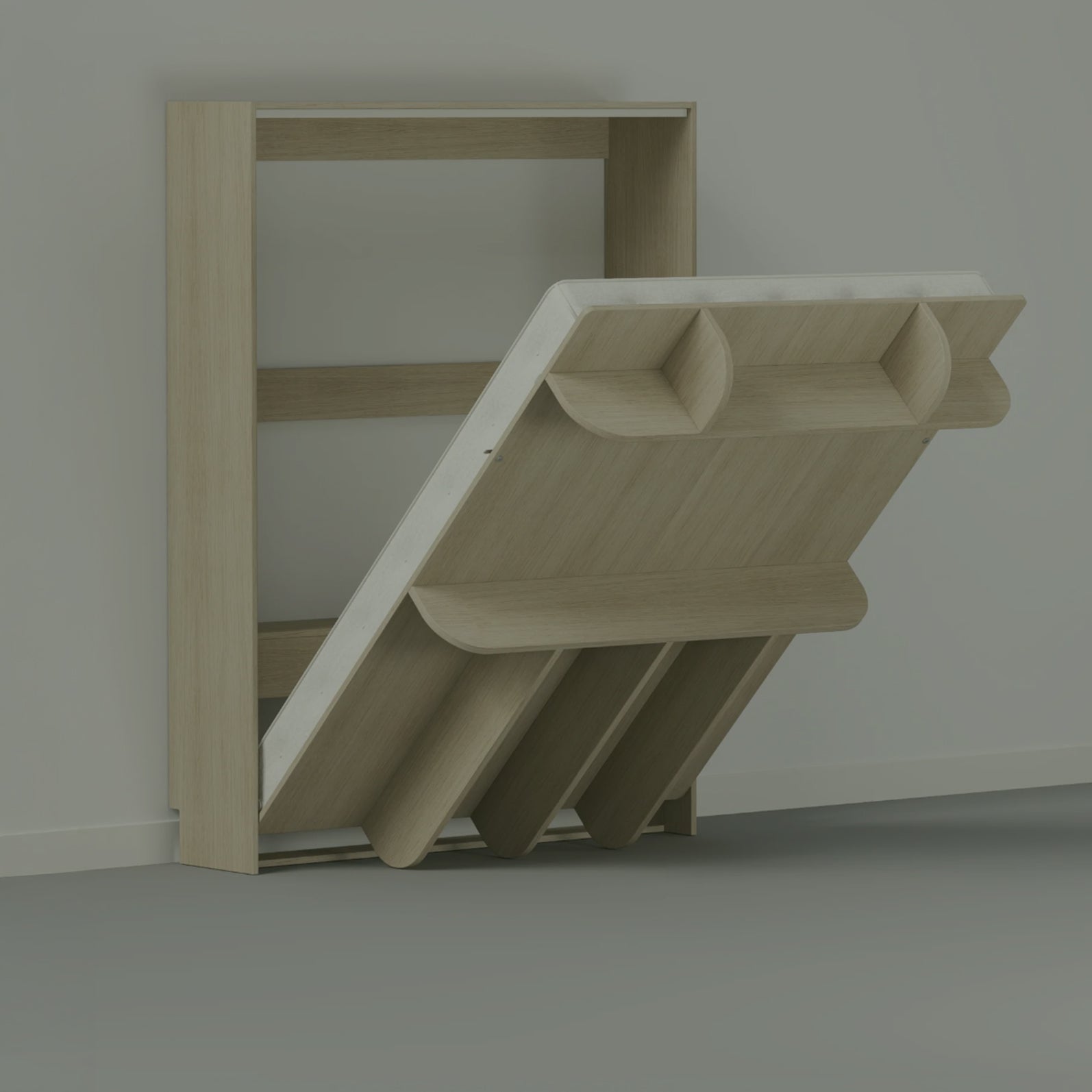
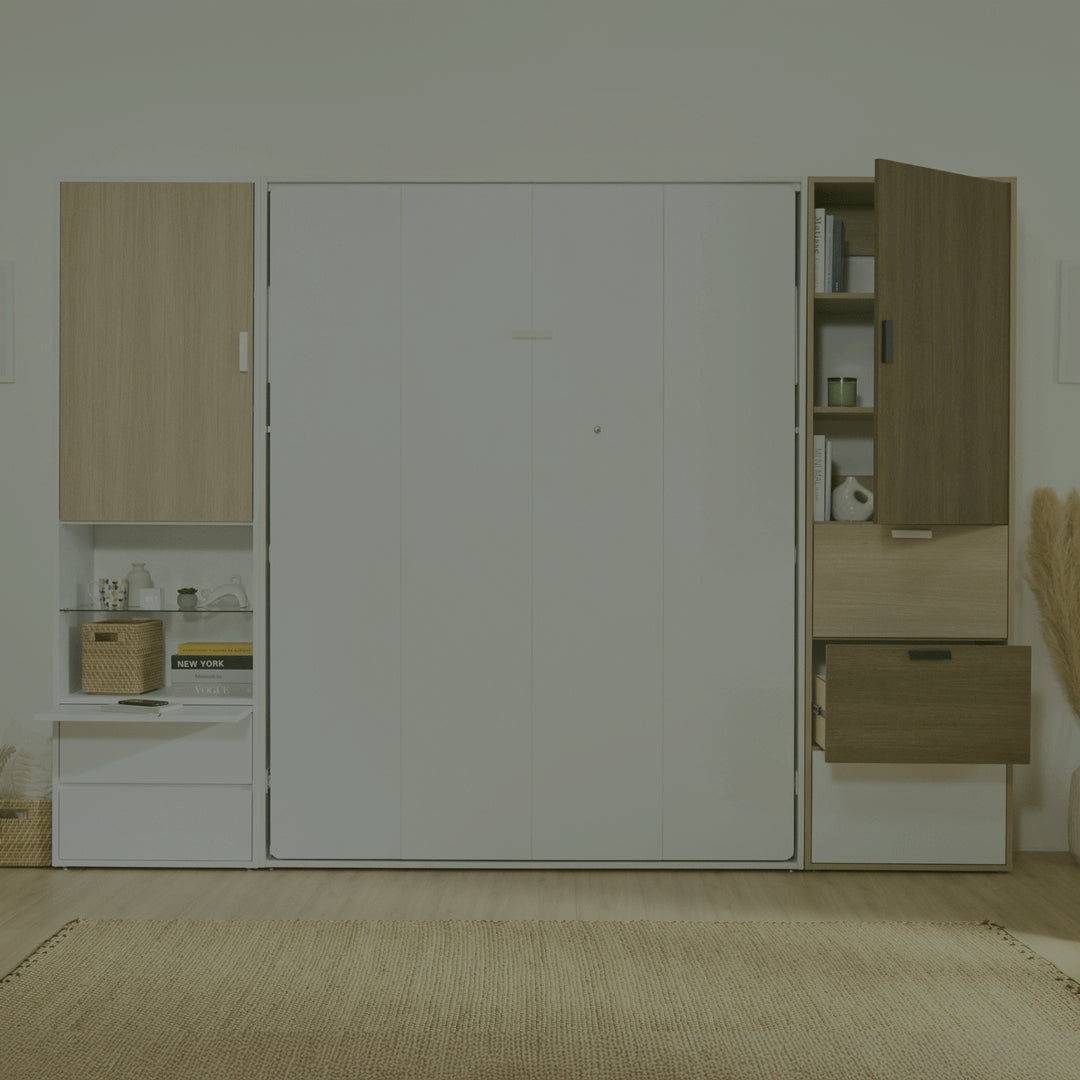
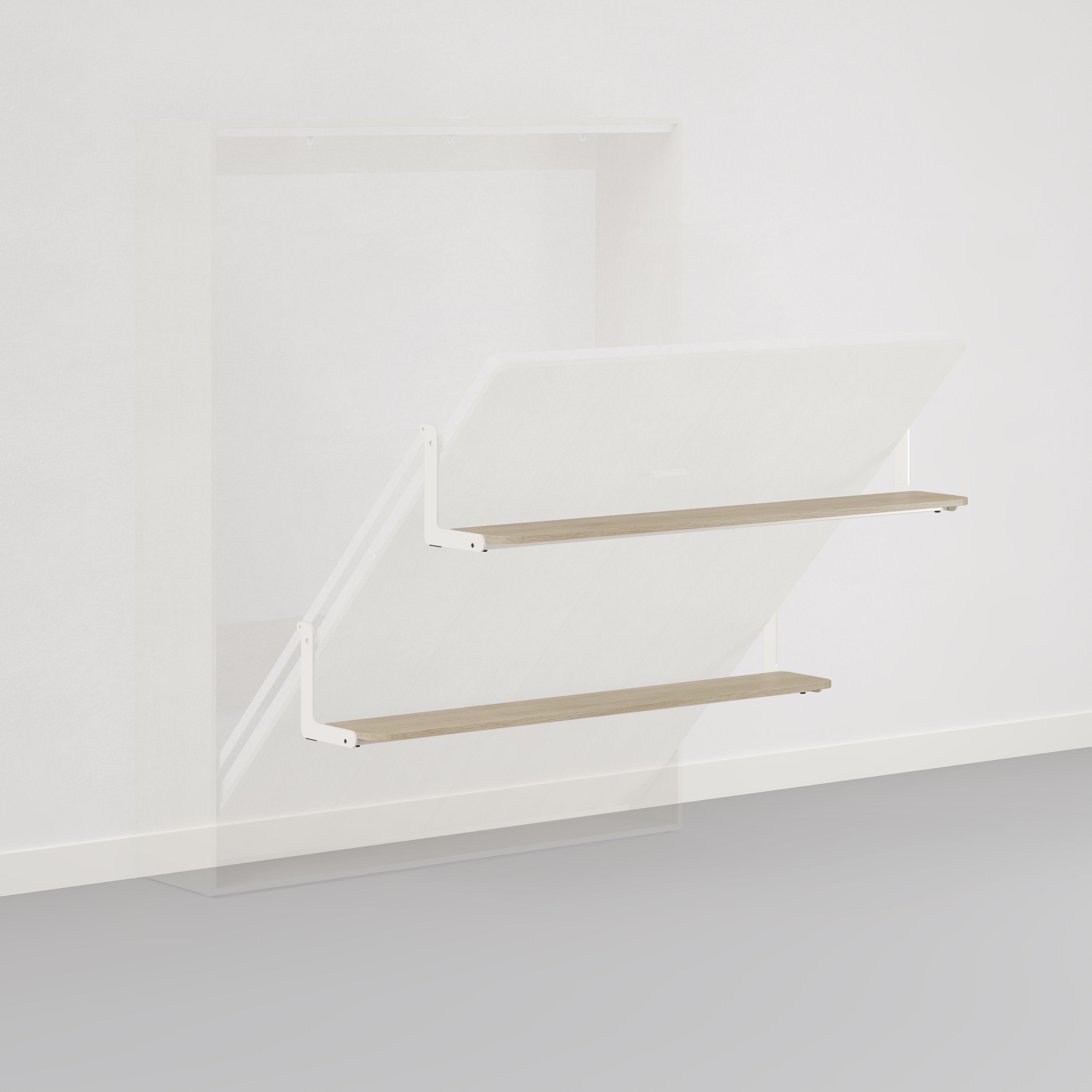
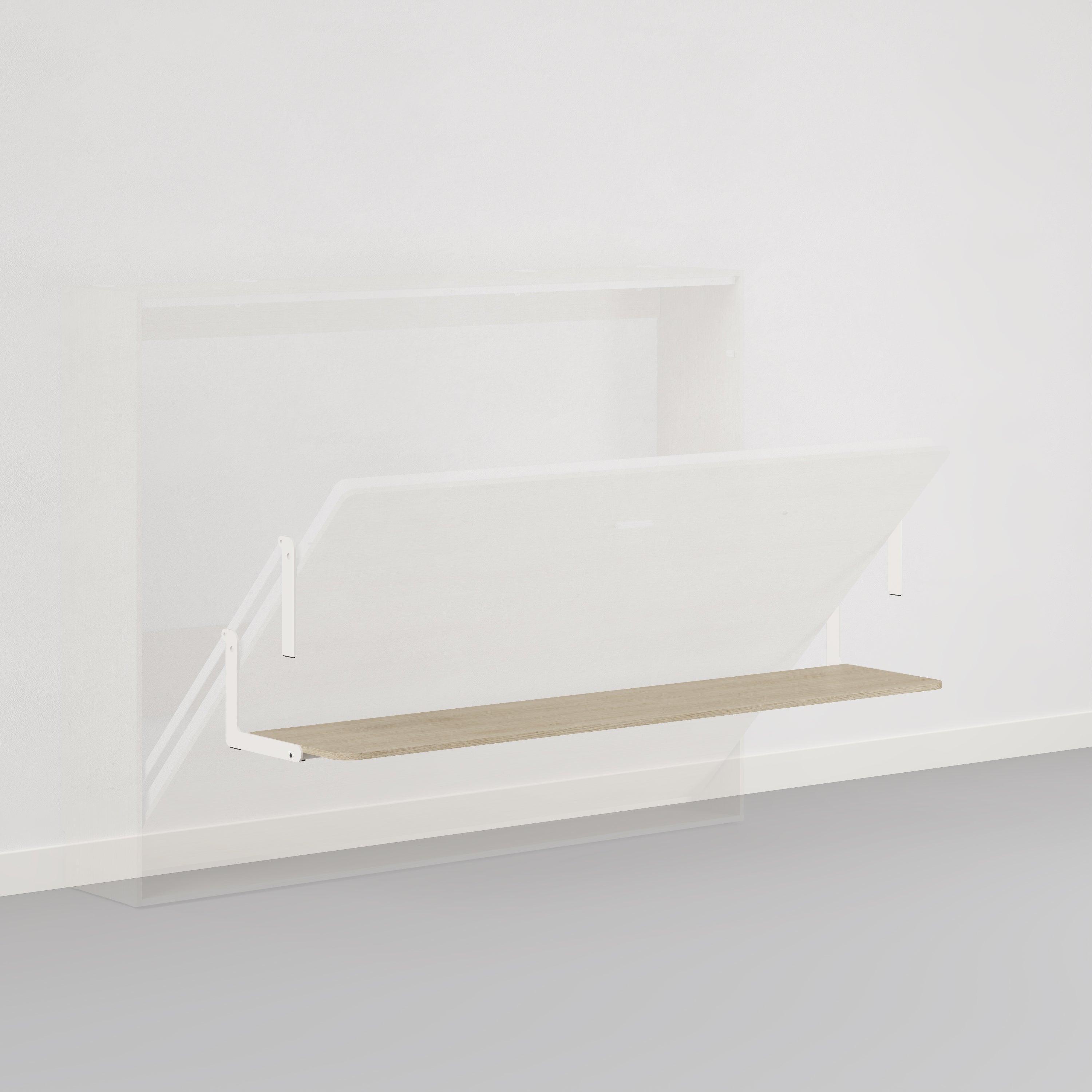
Not only does a wall allow spare rooms to perform multiple functions, but the piece itself is also dual-use. Many of today’s Murphy bed options are equipped with pull-out desks and cabinetry. It is a two-for-one, cost and space-saving investment.
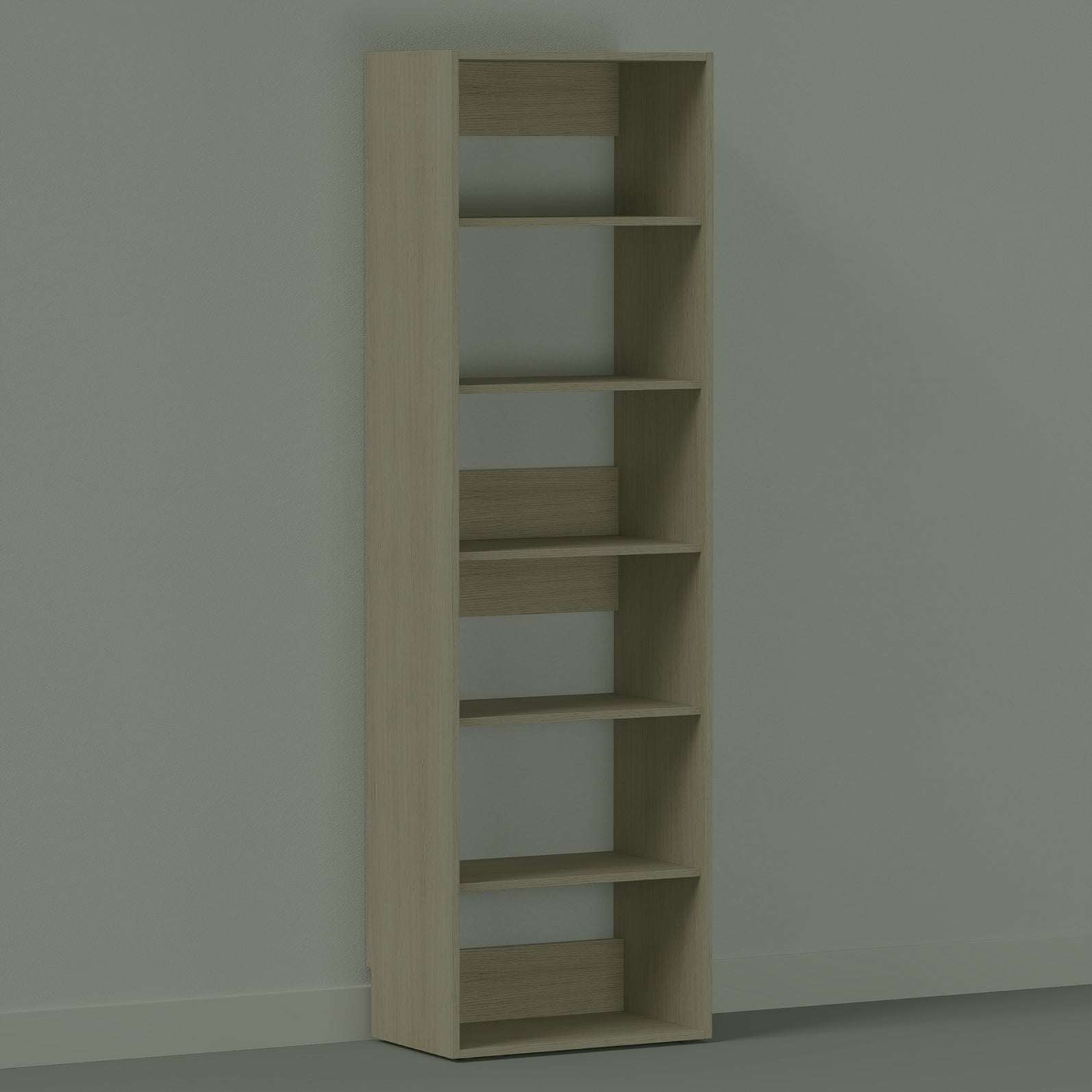
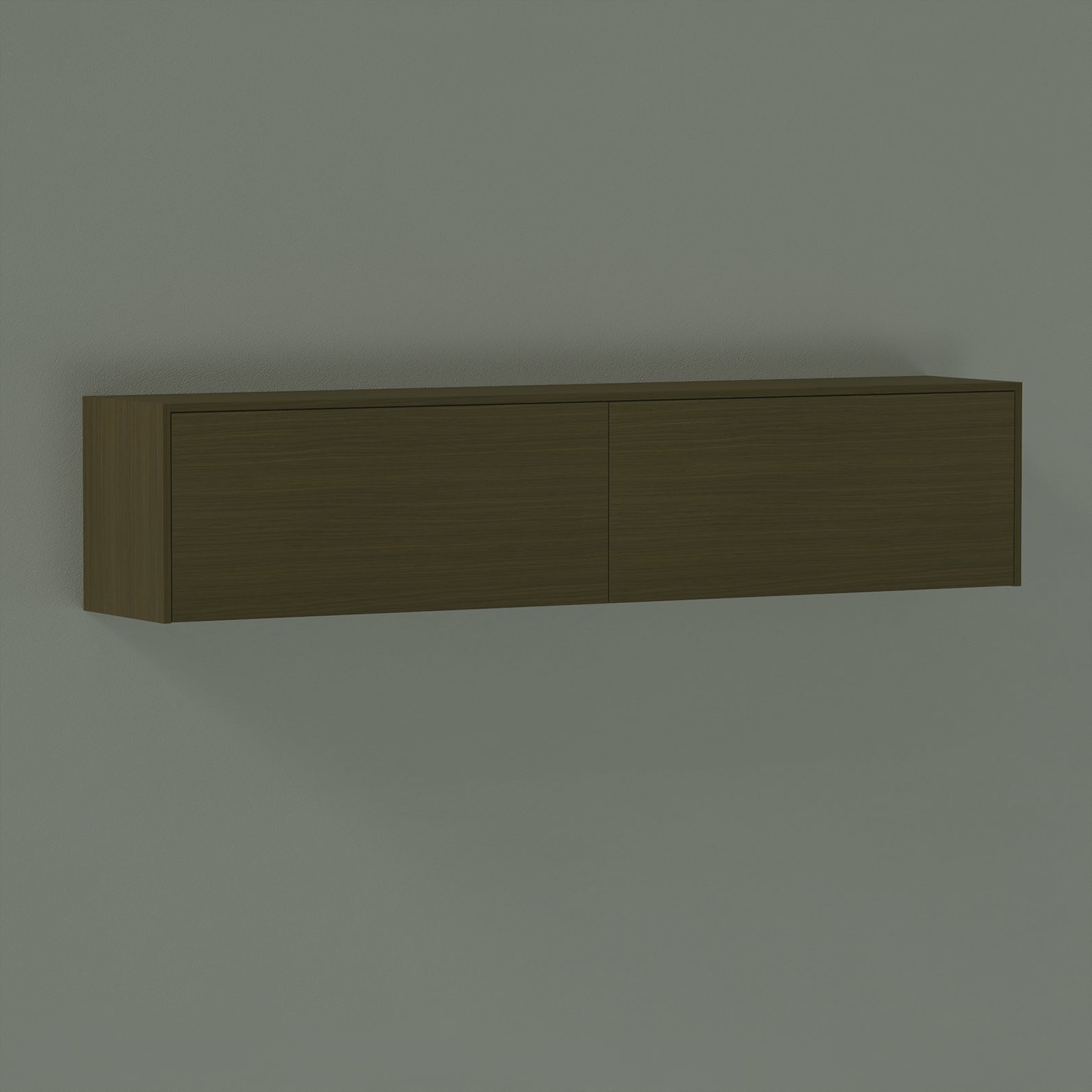
The Lori Bed, for example, offers Murphy bed upgrades like shelves and desks that are perfect for adding small decorations and a full work-from-home setup - no need to remove small items as the stay-level shelves and desks will keep items safe and sound as you lift and lower the bed. Other models are outfitted with all the bells and whistles, such as LED lighting, USB ports, and even leather sofas.
Maximize your space without sacrificing style.
Pro: Built to Last

Credit: Decorist
One of the most significant differences between old-school Murphy beds and modern models is the quality. Murphy beds have a bad wrap for being flimsy, but today’s versions can be very durable and last for generations. Some are made with all wood construction, making them more likely to last through the repeated lifting and lowering movement.
Of course, there are cheaper particleboard options on the market that might be a better fit for a temporary living situation, such as a college dorm or your starter basement apartment. Overall, the modern models made from quality materials are real investment pieces designed to last for years.
Con: Permanent Commitment

Wall beds require screwing into studs or drywall. Beds with metal lifting mechanisms often have to be installed on the baseboard or even on the floor. If you’re living in a rental unit, you may not be allowed to mount anything into the wall, which can make a cabinet bed a non-starter.
Pro: Aesthetic Flexibility
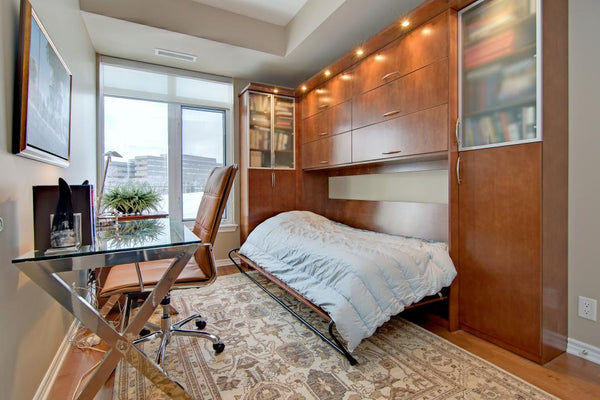
(Credit: Greg Tilley)
Many Murphy bed companies offer beds available in different orientations, sizes, and finishes. As featured on HGTV, designer Deborah Gerbis decided on a custom solution for the narrow Ottawa apartment pictured above.
"We thought about a Murphy-style bed, but positioned the bed horizontally instead of the traditional vertical orientation. We chose maple cabinetry with a medium stain to complement the floor and included frosted glass elements to keep the unit from feeling imposing in such a narrow room," Gerbis told HGTV.
There’s also the option to add custom hardware to match other furniture or add fun features, like hooks for your favorite cozy bathrobe. If you want a custom color, some companies, like Lori Beds, offer different finishes for The Lori Bed. You can surely pick a color that matches your room.
One thing to keep in mind is that Lori Beds is expanding its pre-finished options, so keep an eye out for new designs!
Con: Upfront & Investment Cost

Basic, quality-built Murphy beds typically start near $2,000, and fully custom or high-end builds can run $5,000 and up, depending on materials and add-ons. You generally get what you pay for. In the case of Lori Beds, they’re able to offer high-quality Murphy beds made to stand the test of time, which means fantastic cost savings for their customers. If you’d like to learn more about our high-end products, click here to see more.
Pro: Superior Comfort

Credit: Addicted 2 DIY
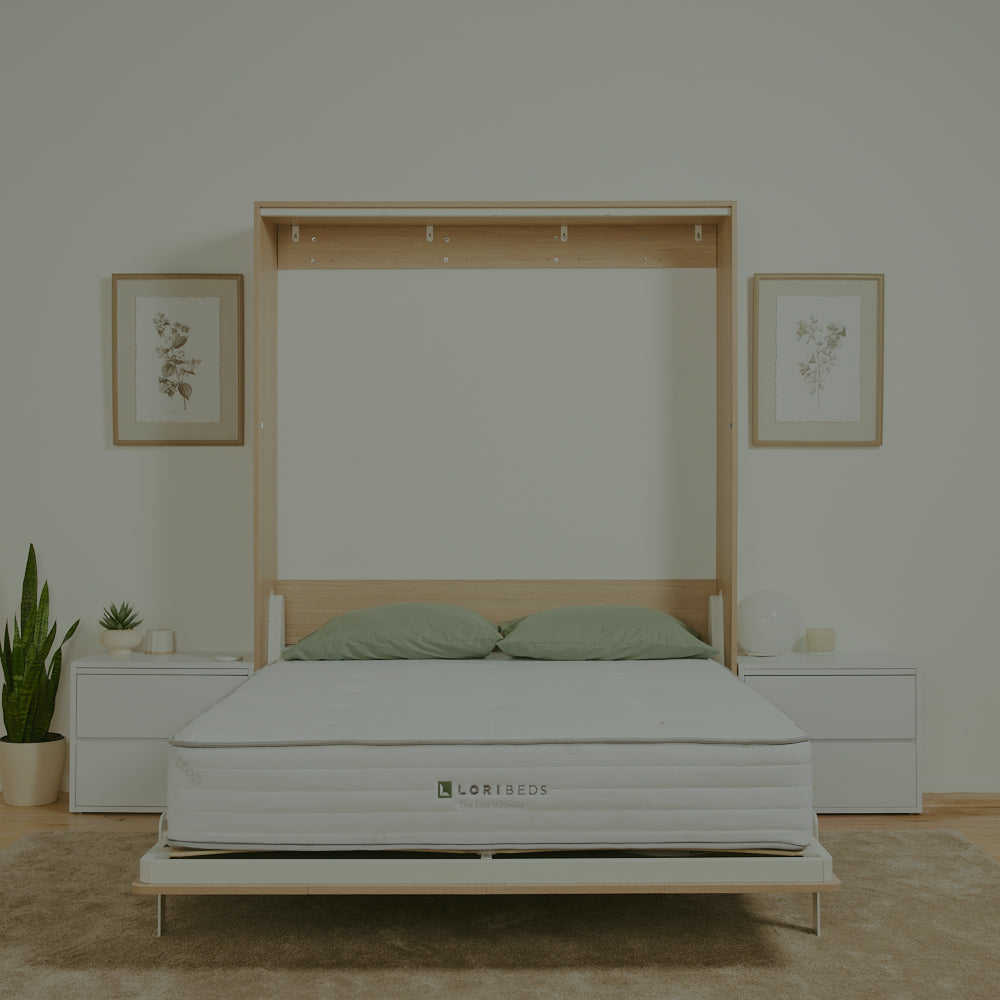
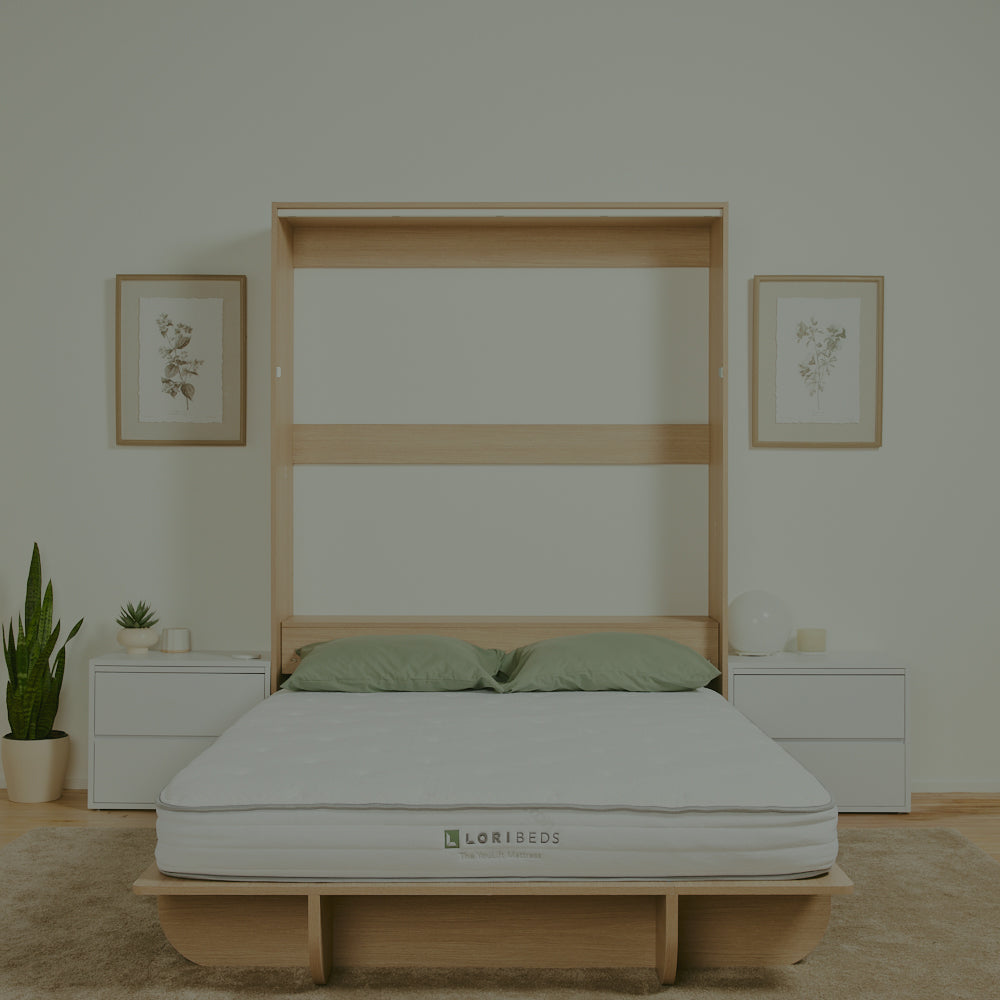
People in the market for a Murphy bed often question if it’s going to be comfortable. Unlike traditional beds, a Murphy bed holds a real mattress, and almost any standard mattress will work. No box spring is required.
The majority of Murphy beds can accommodate mattresses up to 12 inches thick. If you are not familiar with mattresses in terms of thickness, they are easy to find, and it's likely you already have one since standard thickness ranges from 9 to 12 inches.
Follow our guide for choosing a Murphy bed mattress
Con: Installation & Safety Concerns

No power drill or stud finder? That’s a problem. Because the install means drilling into studs, this is a harder sell for renters.
Wall Beds don’t arrive fully assembled. It may cost you a couple of hours in time to assemble, but you’ll save on the bottom line. Some landlords won't allow it, and undoing the installation later isn't a quick fix. Check the lease before buying if the unit isn't going in a place you own.
Pro: Provides Room for Innovation

Credit: Home Design Lover
If you love to entertain or invite loved ones to stay for holidays, Murphy beds are great for creating ideal sleeping spaces in unexpected places. Some creative homeowners maximize space by using multiple wall beds to improvise sleeping quarters when needed. Because Murphy bed models come in various sizes and orientations, they can easily be tucked away in a finished basement or family room.
Murphy beds are among the most practical and stylish pieces of furniture available. Murphy beds are a design lover’s space-saving solution, whether it's to maximize space in a small apartment or transform underused spaces into multifunctional rooms.
Potential Drawbacks of Murphy Beds
While Murphy beds are incredibly functional, you need to weigh the downsides before investing:
- Requires Wall Installation: Most Murphy bed models must be anchored to studs or drywall, which may not be permitted in rentals.
- Upfront Cost: Higher-quality Murphy beds are high-priced, though they deliver better durability.
- Limited Placement Options: Rooms with slanted walls, odd corners, or low ceilings may not be compatible.
- Assembly Complexity: Expect a DIY project or professional installation for many models.
Final Thoughts
Murphy beds remain one of the smartest space-saving furniture solutions available. They can transform spare rooms into multifunctional spaces, offer long-term comfort with standard mattresses, and even enhance your home’s style with customizable finishes.
However, they’re not without trade-offs. They require wall installation, cost more than basic alternatives, and demand careful planning to fit your limited space.
If you’re looking for a modern, durable, and customizable option, check out the Lori Bed. It is designed to solve common space-saving bed pitfalls while seamlessly blending into your home.
Explore the Best Places to Buy Murphy Beds!
Related: Does a Murphy Bed Need to be Mounted to a Wall?
Related: How to Downsize to Small Space Living: Best Pro Tips & Tricks


Leave a comment
All comments are moderated before being published.
This site is protected by hCaptcha and the hCaptcha Privacy Policy and Terms of Service apply.